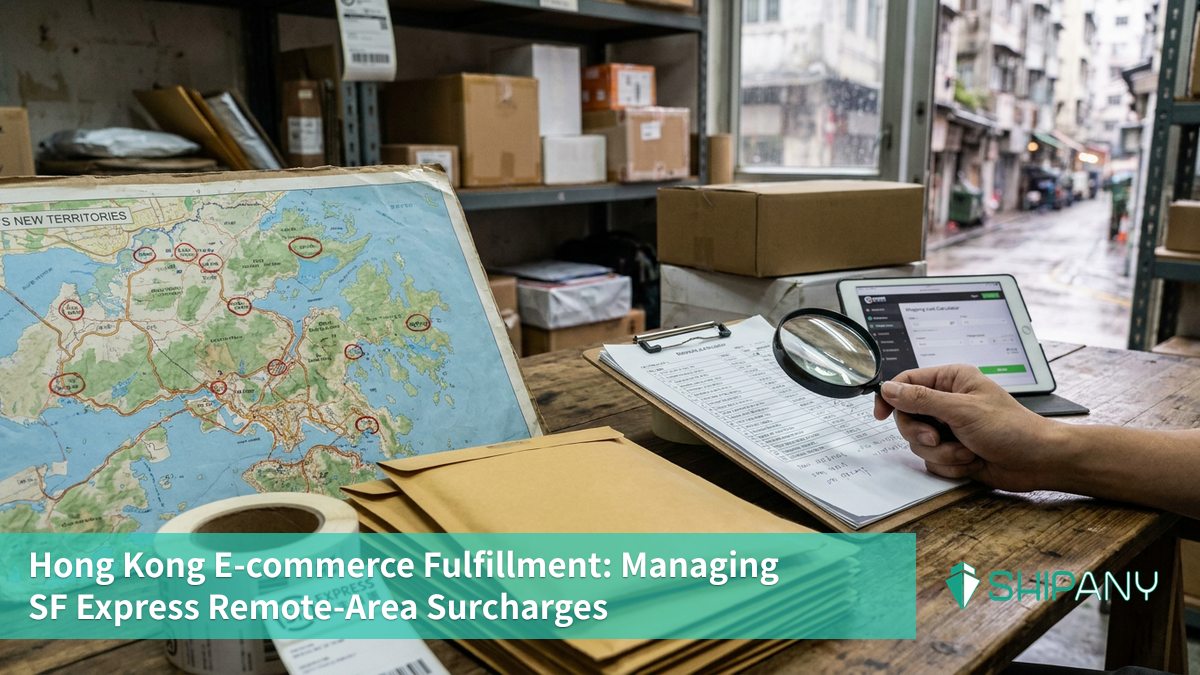
To manage SF Express remote-area surcharges in Hong Kong, check each delivery address against SF Express’s current remote-area coverage, make possible extra charges clear before checkout, and offer a suitable alternative such as an available pickup point. A district name alone is not enough to confirm whether a surcharge applies: coverage can include particular estates, streets, industrial buildings and outlying areas, and the carrier’s list and charges can change.
Which Hong Kong deliveries may incur an SF Express remote-area surcharge?
A shipment collected from or delivered to an address on SF Express’s current Hong Kong remote-area coverage list may incur a remote-area surcharge. The list covers specified locations across multiple districts, including parts of Tuen Mun, Yuen Long, North District and Tai Po, as well as locations such as Sai Kung, Discovery Bay, Cheung Chau, Lamma Island and parts of Lantau. These are examples, not a complete checklist; SF Express notes that listed areas are not necessarily exhaustive.
Do not classify every address in a named district as remote—or assume that a familiar urban address is automatically exempt. The exact estate, building, street and delivery method can matter. SF Express’s published coverage document also distinguishes remote-area charges from residential surcharges, so a residential address outside the remote-area coverage may still have a separate fee. Confirm the applicable charge with SF Express or your courier account contact rather than relying on an old order, a customer’s postal district or a general map.
How can you check an address before dispatch?
Check the full Hong Kong delivery address against the latest SF Express remote-area coverage document before promising a final delivery cost. Collect the recipient’s district, estate or village, building name, street and flat details at checkout; for locations such as an outlying island or rural area, confirm any additional location details your courier needs. Match the complete address to the carrier’s coverage information and ask SF Express to confirm uncertain cases before creating the waybill.
Build the check into order handling instead of leaving it to the packing bench. Flag addresses containing locations you regularly need to verify, and review the flag before the parcel is handed over. Keep a record of the address, the carrier’s response and the fee applied so your support team can explain a later adjustment. Recheck the official coverage and charging terms regularly: a saved list or a surcharge observed on an earlier shipment is not a guarantee that the current classification or amount is the same.
How should your shipping policy explain possible extra fees?
State plainly that SF Express may apply a remote-area or residential surcharge to some Hong Kong deliveries, and explain who will pay if the fee is confirmed after an order is placed. Customers should learn about the possibility before they pay, not from a delivery request they did not expect. Keep the explanation close to your Hong Kong delivery rates and link it from checkout where customers can find it before submitting an order.
Avoid promising a fixed surcharge unless your SF Express arrangement confirms the amount and how it applies to that shipment. The relevant fee can depend on the carrier’s current terms and the collection or delivery arrangement. Make your policy clear about whether your store absorbs a confirmed charge, collects it from the buyer, or contacts the buyer to agree on another delivery option. If you cannot confirm the exact cost at checkout, say so directly and explain how you will handle the order. Do not describe a carrier fee as a government charge or imply that every address in a named district will incur it.
How can you show the possible cost at checkout?
Give shoppers a clear delivery choice and disclose any address-dependent surcharge before they complete payment whenever your checkout setup allows it. For example, a customer entering an address in Discovery Bay or on Cheung Chau should be able to understand that SF Express may classify the destination as remote and that an extra fee may apply. If your store cannot identify eligibility or calculate the charge reliably in real time, do not display a guessed amount as though it were confirmed.
Instead, explain the uncertainty at checkout and set a consistent process for confirming the address. Depending on your policy, you might contact the customer with the confirmed fee and ask them to approve it, offer a suitable pickup alternative, or absorb the charge. Make sure the order confirmation and customer-service response use the same terms as your shipping policy. Also check how returns, reshipments and failed delivery attempts are handled under your carrier agreement; do not assume that an original delivery estimate covers every later charge.
Can a pickup point avoid a remote-area delivery charge?
A pickup point can be a useful alternative when it is available and convenient for the recipient, but it does not automatically remove every remote-area charge. SF Express’s terms distinguish remote-area to-door services from self-pickup at a remote cooperation point or locker, and the applicable charge depends on the service and location. Confirm the current terms for the specific point before telling a customer that pickup will cost less or avoid a surcharge.
Offer pickup as a choice, not as an assumption that suits everyone. Show the pickup location and any collection instructions clearly, and let the customer consider travel time, opening or access arrangements and the collection deadline. In Hong Kong, a point that is practical for a customer on Hong Kong Island may not be convenient for someone on an outlying island or in the New Territories. If the customer keeps home delivery, record the confirmed address and explain any confirmed fee before dispatch.
How can ShipAny help manage courier and pickup choices?
A fulfillment partner such as ShipAny can help merchants manage shipping choices in one workflow rather than handling every courier booking manually. Depending on your setup and available services, you can use ShipAny to review delivery options, arrange waybills and pickup, and keep tracking information together. That makes it easier for your team to check an address that may need special handling, choose an appropriate available courier or pickup option, and communicate the selected service consistently.
ShipAny does not decide whether SF Express classifies an address as remote or set the carrier’s surcharge. Confirm the charge with SF Express and make sure your store’s policy explains how it is handled. ShipAny’s Hong Kong logistics services can help you manage local courier and pickup options, while its E-commerce delivery service supports store shipping tasks such as quotes, waybills, pickup and tracking. Check which services and locations are available for your account before presenting them to customers.
FAQ
Does every address in Sai Kung or Yuen Long incur an SF Express remote-area surcharge?
No. SF Express coverage is based on specified locations, and a district name alone does not confirm whether a particular address is chargeable. Check the complete address against the carrier’s latest coverage information and confirm uncertain cases with SF Express.
Is an SF Express residential surcharge the same as a remote-area surcharge?
No. SF Express identifies remote-area and residential surcharges separately in its Hong Kong information. A residential address outside the remote-area coverage may still be subject to a residential fee, so verify both the address classification and the current charging terms.
Will choosing an SF Express locker or pickup point remove the surcharge?
Not necessarily. SF Express terms distinguish remote-area door-to-door service from self-pickup at a remote cooperation point or locker, and the applicable fee depends on the location and service. Confirm the current charge for the specific pickup point before offering it as a way to avoid a fee.
Who should pay a remote-area surcharge on a Hong Kong online order?
The merchant should set and communicate this in the shipping policy and checkout. You can absorb a confirmed carrier fee, disclose that the customer may be asked to pay it, or offer another delivery option, but explain the process before dispatch and avoid quoting an unverified amount.
Conclusion
Treat remote-area checking as part of order fulfillment, not a surprise to resolve after dispatch. Verify the full Hong Kong address against current SF Express information, disclose your surcharge policy before checkout, and confirm the cost and availability of any alternative delivery option.
With a consistent address-review process and delivery workflow, your team can set clearer expectations while giving customers a practical choice between home delivery and eligible pickup options.