
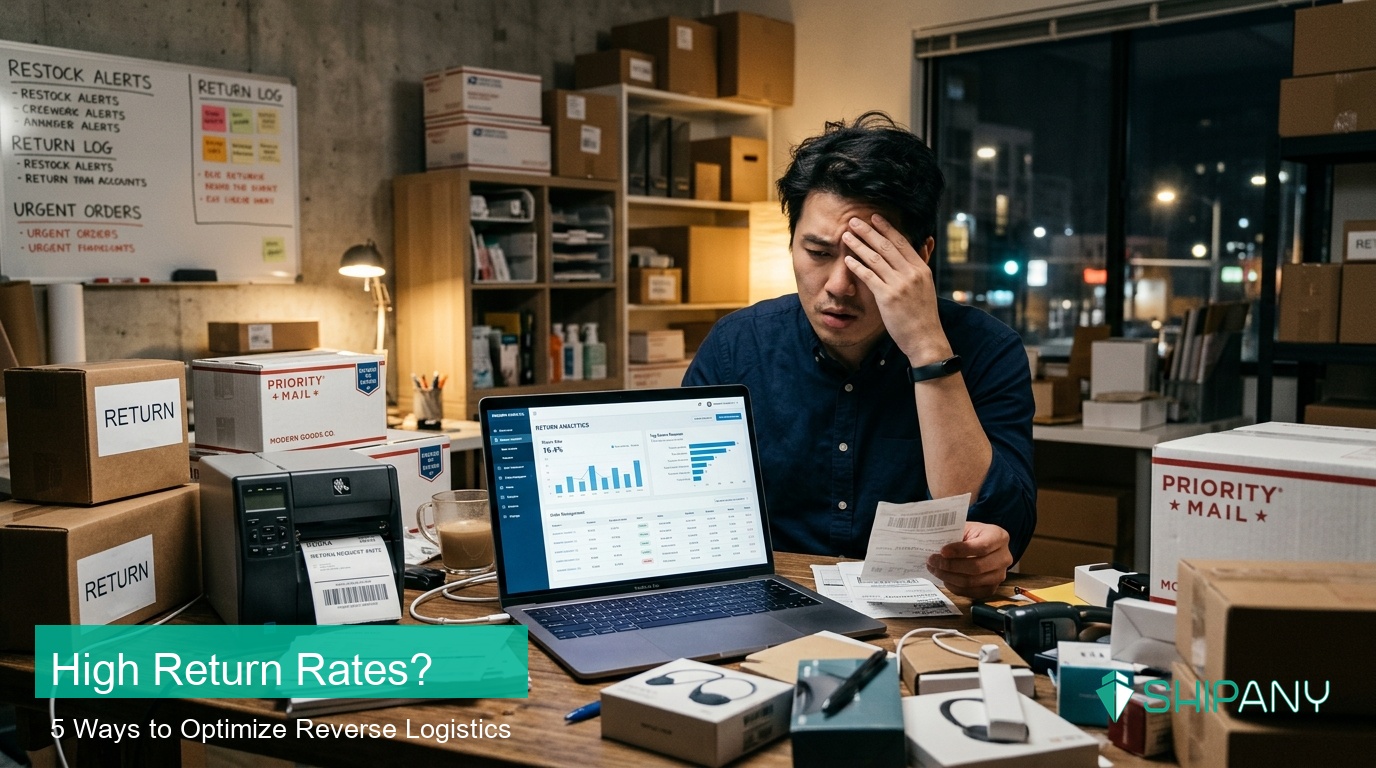
High Return Rates? Here Are 5 Ways to Optimize “Reverse Logistics” and Lower Hidden E-commerce Costs
In the highly competitive e-commerce landscape, acquisition costs (CAC) are constantly climbing, yet many e-commerce business owners overlook a silent profit killer: high return rates. The expensive cost of “Reverse Logistics”—which includes return shipping fees, manual inspections, re-packaging, storage management, and even the loss from markdown sales—can directly eat away at your bottom line.
If your online store’s return rate remains consistently high, it not only compresses your profit margins but also dampens customer trust and their willingness to repurchase. Here are 5 key strategies to help you optimize your reverse logistics and turn an operational challenge into a competitive advantage.
1. Improve Return Policy Transparency
Your return policy serves as the final trust check for customers before they hit the “buy” button. A clear, easy-to-understand, and friendly policy can significantly lower a customer’s anxiety about making the wrong decision.
– Transparent Communication: Clearly label which items are returnable, provide a timeline for the refund process, and proactively explain tracking statuses.
– Reduce Friction: Implement an automated return portal to reduce the time spent on repetitive communication with customer support. When customers feel respected during the return process, they are more likely to return for future purchases.
2. Enhance Product Descriptions and Size Guides
“Mismatches with expectations” and “incorrect sizing” are the two primary drivers of e-commerce returns. To reduce returns at the source, you must drastically improve the transparency of product information.
– Visual Presentation: Provide high-quality photos from multiple angles and demonstration videos of the product in use.
– Precise Data: For apparel, provide specific size charts and instructions on how to measure. You can even include review suggestions from other buyers with similar body types. More precise information filters out bad purchase decisions before they happen.
3. Analyze Return Reasons with Data
Return data is the most authentic compass for product optimization. You shouldn’t view returns solely as a financial loss; instead, treat them as insights for product improvement.
– Implement Tagging: Require customers to select a primary reason when requesting a return (e.g., material does not match description, logistics delay, product defect).
– Loopback Improvement: Aggregate this feedback. If you find that a specific product is frequently returned due to material mismatches, update the text description on that product page immediately to correct consumer expectations.
4. Utilize ShipAny Returns Management for Automation
ShipAny has designed a specialized “Returns Management” feature to solve the core pain points of e-commerce returns. By digitizing the workflow, you can drastically boost efficiency. You can watch our demo video for more operational details:
– Branded Returns Page: Allow your consumers to initiate returns effortlessly through your dedicated returns page, tailored to provide a smooth and branded experience.
– Comprehensive Returns Approval Process: The streamlined electronic workflow ensures that returns are handled efficiently and effectively, eliminating manual recording errors.
– Return Labels & Tracking: The system automatically generates return and exchange shipment labels and provides tracking status updates, keeping you and your consumers informed in real-time.
– Email Notifications: Stay informed every step of the way with timely email notifications, keeping your consumers updated on the status of their return request to boost satisfaction.
5. Encourage Exchanges Instead of Refunds
A return is the beginning of losing a customer, but an exchange is an opportunity for a second conversion. Turning the refund mechanism into an incentive for exchange is an excellent strategy to mitigate return costs.
– Flexible Exchange Policy: Use the ShipAny integrated exchange workflow to offer “free exchange shipping” or “extra store credit on exchanges” to encourage consumers to swap for a different color or size.
– Consistent Consumer Experience: Use proactive after-sales care to make the exchange process a delightful brand experience, which in turn boosts customer loyalty.
—
Frequently Asked Questions (FAQ)
Q: How can I determine if my e-commerce return rate is too high?
A: We suggest regular benchmarking against industry standards. If your return rate is consistently higher than the average, it is time to launch a reverse logistics optimization project.
Q: How can I use marketing to lower return rates?
A: Include User-Generated Content (UGC) in your product descriptions and provide detailed fit guides to significantly reduce perception gaps.
Q: How do I get started with ShipAny Returns Management?
A: Simply log in to your ShipAny account to enable the Returns Management feature. If you need assistance customizing your brand page, please contact us at info@shipany.io.
Q: Does optimizing reverse logistics take long to show results?
A: Systematic optimization typically yields data feedback showing a decrease in return rates and logistics costs within 3-6 months.