Hong Kong DTC sellers can handle a Black Friday shipping surge by preparing stock and dispatch plans early, processing orders in controlled batches, and setting delivery expectations customers can trust. The key is to treat fulfilment as a daily operation with clear cut-off times—not as a last-minute effort to hand every parcel to a courier at once.
This guide covers pre-sale checks, order batching, packing and staffing, choosing local and cross-border delivery options, and what to communicate when a parcel is delayed. It also considers practical details for merchants operating across Hong Kong Island, Kowloon and the New Territories, where collection schedules, addresses and delivery arrangements can affect the customer experience.
How should you prepare your store before Black Friday?
Start with a fulfilment plan before you launch the sale. Review which products are likely to sell quickly, confirm that inventory counts match the stock you can actually dispatch, and identify items that need special packing or documentation. If products are stored in more than one location, make clear which location will fulfil each order so that stock does not get promised twice.
Set a realistic dispatch promise for each order type and make it visible on product pages, at checkout and in your order confirmation. Distinguish dispatch time from delivery time: a parcel handed to a carrier today is not necessarily delivered today. Ask each carrier or pickup provider about its Black Friday operating arrangements, collection days and latest pickup cut-off time for your location. Do not assume a normal-day cut-off applies during a peak period.
Before the promotion, test the full process with a small order: payment, inventory update, pick list, label, parcel handover and tracking message. Check that your store captures complete Hong Kong addresses, including building and unit details, and that staff can identify orders with missing or unclear information. A quick test can reveal a label or integration issue before it affects a large queue.
How can you batch Black Friday orders without creating a backlog?
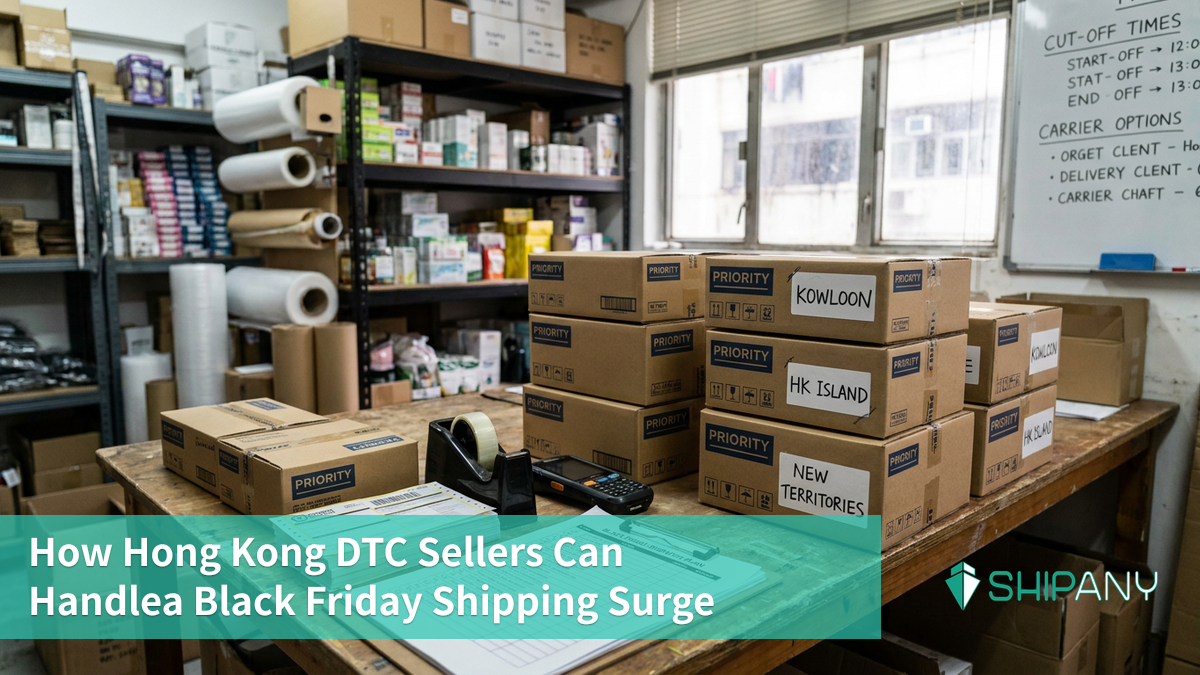
Batch orders by a clear, repeatable rule—such as order date, delivery service or product location—and release manageable groups to the packing team. A batch should be small enough to finish, check and hand over before the next one begins. This gives you a visible queue and makes it easier to spot an order that is stuck because of a stock mismatch, address query or payment review.
Use a pick list or digital order queue rather than asking staff to switch between individual orders and unrelated tasks. Keep orders with the same product or packing requirements together where practical, but separate exceptions such as fragile goods, pre-orders or cross-border shipments. Scan or verify each item against the order before sealing the parcel. A simple final check helps prevent the costly extra work of correcting a wrong item after dispatch.
Plan each batch around the actual collection schedule. If a courier collects from your premises in the afternoon, set an internal packing deadline that leaves time for checks and label printing before the published pickup cut-off. Orders that miss that handover should be assigned to the next collection or given a revised dispatch expectation; do not mark them as shipped simply because a label has been created.
How should you organise packing and staffing for peak days?
Set up a dedicated packing area with the most-used packaging, tape, labels and order information within reach. Keep stock replenishment separate from parcel checking where space allows, and mark a clear area for packed orders awaiting collection. This reduces unnecessary movement and helps the team distinguish between an order that is ready and one that still needs a final check.
Assign roles for picking, packing, checking and handover, and name someone to handle exceptions such as missing stock, address questions and failed label creation. If the same small team has to do everything, agree how work will be prioritised and when staff can ask for help. Brief temporary or seasonal staff on product handling, packing standards, data privacy and how to flag a problem rather than guessing.
Keep a simple count of orders completed, parcels awaiting collection and orders held for review. Check it at the start and end of each shift, then compare it with the store’s order queue. If packing is falling behind, temporarily prioritise orders by the promise shown to customers and the next available pickup—not just by whichever parcel is easiest to pack. Leave enough time to reconcile the handover so that every parcel passed to a driver is accounted for.
Which carriers should you use for Hong Kong and cross-border orders?
Choose a service based on the destination, parcel characteristics, collection availability and delivery promise, rather than relying on one carrier for every order. For local deliveries, check which options serve the addresses you sell to across Hong Kong Island, Kowloon and the New Territories, and whether they offer pickup, a staffed drop-off point or a locker network that suits your workflow. A service that works well for one district or building type may not fit every delivery.
Confirm the pickup days, cut-off times, parcel size limits and tracking events directly with the provider before the sale. Ask how it handles buildings with restricted access, incomplete addresses and delivery attempts when the recipient is unavailable. For cross-border orders, check the destination service, customs information required, handover arrangements and how tracking continues after the parcel leaves Hong Kong. Complete the applicable shipping documents accurately, including the contents and declared information requested for the shipment.
ShipAny can help merchants bring delivery tasks into a more manageable workflow. Use the Hong Kong logistics services page to explore local courier, locker and pickup options, and the International express logistics page for cross-border shipping services. The right choice still depends on the parcel and destination, so check service details and collection arrangements before making a customer-facing promise.
What should you do when a pickup or delivery is delayed?
Respond as soon as you have a reliable indication that a parcel will miss its expected handover or delivery window. First establish where the delay occurred: the order may still be awaiting packing, it may have missed the pickup cut-off, or the carrier may have scanned it but not updated tracking. Check the order record and carrier information before telling the customer what happened, and give a new estimate only when you can support it.
Send a direct update that names the affected order, explains the next step and says when the customer can expect another update. For example, if a parcel missed today’s collection, say it is scheduled for the next available handover and that tracking will be shared once the carrier scans it. Avoid promising an exact delivery date unless the service provides a dependable commitment for that route. If the carrier needs an address correction or recipient response, tell the customer what action is needed and how to provide it.
Keep a short list of delayed or exception orders and assign someone to check them at set points during the day. If the tracking status has not changed as expected, contact the carrier through its normal support process and keep a record of the response. ShipAny’s Shipment tracking page can help customers check shipment progress; pair tracking access with a human update when a parcel needs attention rather than leaving customers to interpret an unexplained status.
FAQ
Should I use the same carrier for local and international orders?
Not necessarily: local and cross-border orders can require different services, pickup arrangements and shipment information. Check coverage across Hong Kong Island, Kowloon and the New Territories for local parcels, then assess the destination service and handover process for international shipments. Choose based on the parcel, delivery promise and operational fit.
FAQ 2
Hong Kong DTC sellers can handle a Black Friday shipping surge by preparing stock and dispatch plans early, processing orders in controlled batches, and setting delivery expectations customers can trust. The key is to treat fulfilment as a daily operation with clear cut-off times—not as a last-minute effort to hand every parcel to a courier at once.
This guide covers pre-sale checks, order batching, packing and staffing, choosing local and cross-border delivery options, and what to communicate when a parcel is delayed. It also considers practical details for merchants operating across Hong Kong Island, Kowloon and the New Territories, where collection schedules, addresses and delivery arrangements can affect the customer experience.
FAQ 3
Hong Kong DTC sellers can handle a Black Friday shipping surge by preparing stock and dispatch plans early, processing orders in controlled batches, and setting delivery expectations customers can trust. The key is to treat fulfilment as a daily operation with clear cut-off times—not as a last-minute effort to hand every parcel to a courier at once.
This guide covers pre-sale checks, order batching, packing and staffing, choosing local and cross-border delivery options, and what to communicate when a parcel is delayed. It also considers practical details for merchants operating across Hong Kong Island, Kowloon and the New Territories, where collection schedules, addresses and delivery arrangements can affect the customer experience.
Conclusion
A smoother Black Friday dispatch starts before the first promotion goes live: confirm stock, agree on realistic cut-offs, and prepare a process your team can repeat. During the sale, work in controlled batches, verify each parcel and track exceptions rather than letting them disappear into the queue.
When delays happen, prompt and specific updates help customers understand what comes next. With a practical carrier plan for Hong Kong and cross-border orders, your team can manage the surge without making promises the operation cannot keep.