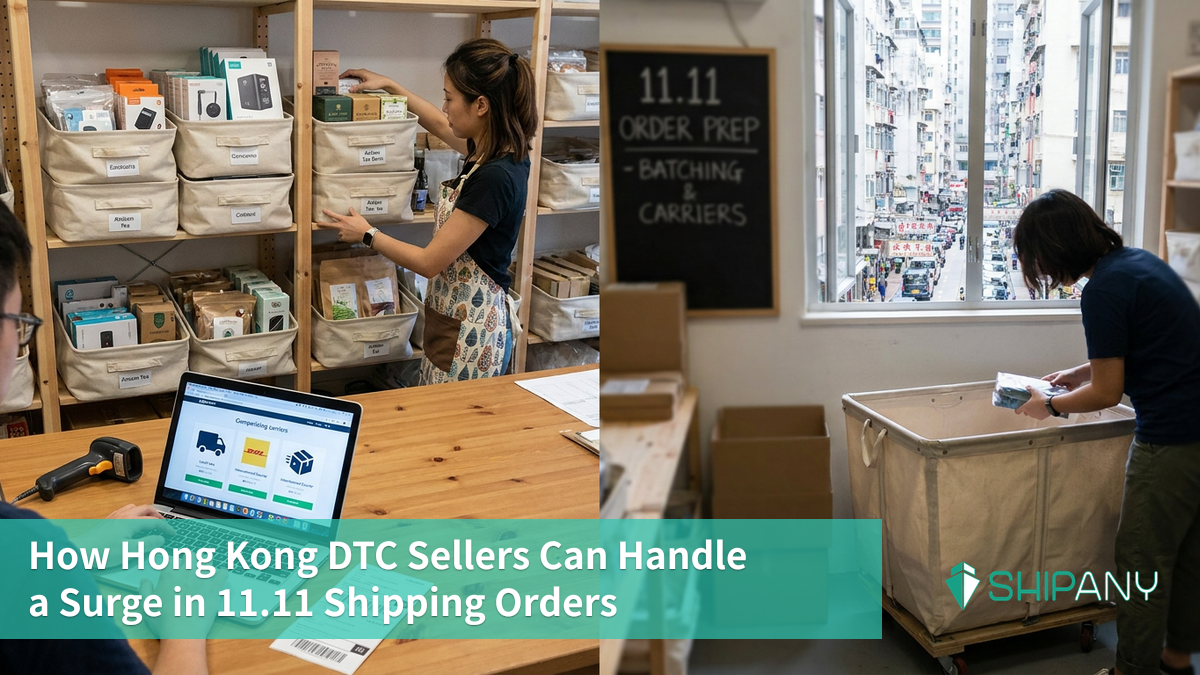
To handle a surge in 11.11 shipping orders, Hong Kong DTC sellers should prepare stock and packing materials in advance, batch orders by destination and service, and match each parcel to a carrier that can meet its delivery needs. A clear dispatch plan helps prevent avoidable delays, fulfilment errors and last-minute pressure when orders arrive faster than usual.
This guide covers how to forecast and organise inventory, set up a practical packing workflow, choose between local and international delivery services, and keep dispatch and customer updates moving. Whether your team ships from a warehouse in Kwun Tong, a small studio in Sheung Wan or a third-party fulfilment centre, the key is to make routine decisions before the order queue builds.
How should you prepare inventory and packing supplies before 11.11?
Start by identifying which products are most likely to sell, then check sellable stock against your store’s inventory records before the campaign begins. Set aside stock for paid orders, account for bundles and promotional products, and agree on a process for handling items that are out of stock. If stock is held across a Hong Kong warehouse and a fulfilment partner, confirm which location will ship each item so orders are not assigned to inventory that cannot be picked in time.
Prepare cartons, mailers, tape, labels and protective materials alongside the products themselves. Choose packaging that protects the item without making parcels unnecessarily bulky, especially for international orders where parcel dimensions can affect the shipping charge. Keep frequently used packing materials close to the packing stations, and prepare a small buffer of common box sizes so the team does not have to pause work to replenish supplies.
How can you batch 11.11 orders without creating picking errors?
Batch orders using practical groups such as destination, delivery service, product type or dispatch deadline, then pick and pack each group using the same steps. For example, separate Hong Kong domestic orders from international parcels, and keep fragile products or multi-item bundles in clearly identified batches. Use a pick list or scan-based workflow to confirm each SKU and quantity before sealing the parcel; a fast packing line is only useful if it does not send the wrong item to the wrong customer.
Give packed parcels a clear staging area labelled by carrier or service, and reconcile the parcel count against the orders marked ready to ship. If several people are working, assign responsibilities for picking, packing, label checks and handover rather than having everyone switch between tasks. For a small team, even a simple spreadsheet or order-management view showing order status, parcel count and exception notes can make it easier to spot orders awaiting stock, address clarification or a shipping label.
Which carriers and service levels should you choose for Hong Kong deliveries?
Choose a local delivery service based on the parcel, the recipient’s location and the delivery promise you can realistically support. Hong Kong sellers may consider services from carriers such as SF Express, Hongkong Post and other local couriers, comparing coverage, collection arrangements, tracking, delivery options and handling requirements. For customers in a residential estate, commercial building or outlying area, check whether the service supports the address and what happens if the recipient is unavailable.
Offer a faster service only where its delivery window and cost make sense for the order; a standard option may suit less urgent purchases, while an express option can be useful for time-sensitive orders. Compare the service conditions rather than relying on a carrier name alone: collection cut-offs, parcel size limits, delivery attempts, proof of delivery and how exceptions are handled can all affect the customer experience. Explain any different delivery choices clearly at checkout, and avoid promising a specific arrival date unless the selected service and your dispatch schedule support it.
How do you manage international 11.11 orders from Hong Kong?
For cross-border parcels, select an international service according to the destination, delivery urgency, parcel characteristics and the level of tracking your customers expect. Depending on the route and service, sellers may use international express providers such as DHL, FedEx or UPS, or postal options offered through Hongkong Post. Compare transit estimates and service coverage for the actual destination rather than assuming that one option is best for every country.
Prepare accurate customs information before dispatch. The shipment description, item quantity, value, currency and recipient details should match the order and the required shipping documents, such as a commercial invoice where applicable. Check whether the destination has product restrictions or import requirements, and make sure the customer understands that customs processing or local charges may affect delivery. A complete and consistent declaration helps reduce avoidable questions and delays, but it cannot guarantee a particular customs clearance time.
How can you streamline fulfilment, dispatch and customer updates?
Set a daily dispatch routine that connects order cut-offs, picking, packing, label creation and carrier collection. Confirm collection times with each carrier, leave enough time to sort parcels before handover, and keep a record of parcels that miss a collection or need another attempt. For Hong Kong deliveries, grouping parcels by carrier and making collection arrangements ahead of the busiest days can help keep the dispatch area manageable.
If manually switching between store orders, carrier portals and tracking messages is slowing the team down, a shipping platform can bring parts of the workflow together. ShipAny can help merchants compare available shipping options, create waybills and organise pickup and tracking through a connected workflow; its E-commerce delivery service supports these store-shipping tasks. For orders going abroad, sellers can also review international express options and select a service that fits the shipment and customer promise.
FAQ
When should a Hong Kong DTC seller start preparing for 11.11 fulfilment?
A Hong Kong DTC seller should prepare before the campaign by checking stock, packaging supplies, carrier arrangements and order workflows. Set internal cut-off times and confirm collection procedures early enough to resolve capacity or process questions before order volumes rise.
Should I use one carrier for all 11.11 orders?
A Hong Kong DTC seller does not have to use one carrier for every 11.11 order. Different services may suit local parcels, urgent deliveries and international destinations, so compare coverage, collection, tracking, size limits and delivery conditions for each type of shipment.
What customs information should I prepare for international parcels from Hong Kong?
For international parcels from Hong Kong, prepare accurate item descriptions, quantities, declared values and recipient details, along with any required shipping documents such as a commercial invoice. Check the carrier and destination requirements for each route, because documentation and import rules can vary.
How can I reduce packing mistakes during the 11.11 rush?
Hong Kong DTC sellers can reduce 11.11 packing mistakes by batching similar orders, using pick lists or scans to verify items, and checking labels before parcels enter the dispatch area. Assigning clear roles and reconciling packed parcel counts against ready-to-ship orders adds another practical check.
Conclusion
A smoother 11.11 dispatch starts with stock and packing preparation, then depends on reliable order checks, suitable carrier choices and a clear handover routine. Review the workflow before the rush so your team can spend busy days shipping orders—not troubleshooting preventable bottlenecks.