Hong Kong DTC sellers can simplify international shipping by bringing courier selection, shipment details, customs preparation and delivery tracking into a consistent workflow. ShipAny can help sellers compare available courier options and manage practical shipping steps from a Hong Kong parcel handoff through to overseas delivery, while the seller remains responsible for accurate product and customs information.
This guide explains how to choose a suitable service, estimate the full shipping cost, prepare the information needed for customs, and coordinate local handoff and last-mile delivery. Whether you send orders from a warehouse in Kwun Tong or arrange collection elsewhere in Hong Kong, a repeatable process makes it easier to serve customers in destinations such as the United Kingdom, Australia or the United States.
How should you choose an international courier from Hong Kong?
Start with the parcel, destination and delivery promise—not just the first price you see. Check the packed parcel’s weight and dimensions, the destination postcode, the product type and any delivery requirements. A lightweight T-shirt order going to London may suit a different service from a fragile skincare bundle going to Sydney. The services available can also vary by destination and shipment details, so confirm that the chosen option accepts your goods and delivery area.
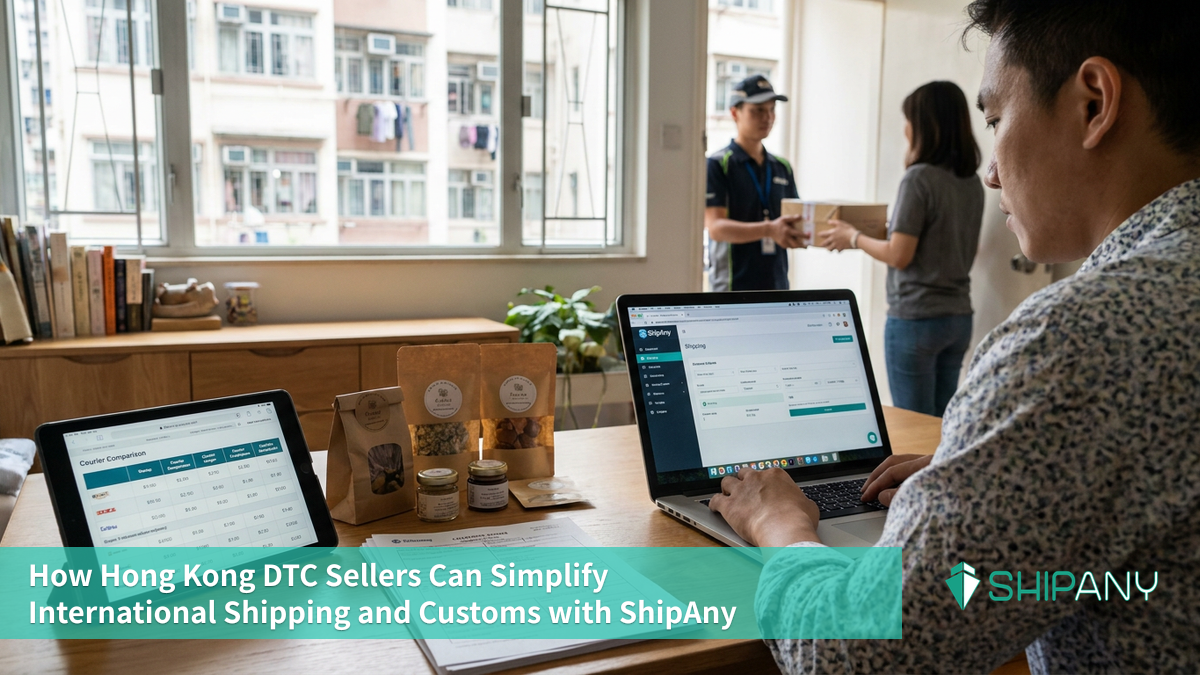
ShipAny’s International express logistics can help Hong Kong sellers manage cross-border courier options in one workflow. Compare the services available for the shipment, then consider speed, tracking, restrictions and the delivery experience alongside the quoted charge. Before booking, make sure the parcel contents and destination information match the service’s requirements; a quote is useful only when the shipment is eligible to travel as described.
How can you estimate the full cost before accepting an order?
Estimate shipping with the packed parcel’s actual weight and dimensions, not a product’s unboxed measurements. Couriers may apply dimensional or volumetric weight rules, and the chargeable weight can therefore differ from what the parcel weighs on a scale. Add the destination, postcode and service level when checking a quote, and account separately for packaging, any applicable surcharges and the possibility of duties or taxes charged to the recipient under the selected shipping arrangement.
Use a consistent parcel profile for products you ship often, but recheck the quote when the package, destination or service changes. ShipAny’s Shipping calculator lets sellers compare live shipping quotes, giving you a practical starting point for setting shipping rates at checkout or reviewing the margin on an order. Confirm what the selected quote includes and how duties and taxes will be handled; do not assume that a courier’s shipping charge covers import charges at the destination.
What customs details should you prepare for an overseas parcel?
Prepare a clear, accurate description of each product, its quantity and value, the country of origin where known, and the recipient’s complete delivery details. A commercial invoice or other customs declaration may be required, depending on the destination and service. Include the appropriate product classification information, such as an HS code when required, and describe the goods specifically: “cotton T-shirt” is more useful than “clothing” or “gift.” The rules and information requested vary by destination, product and courier.
Keep the order record, invoice information and parcel contents aligned. Check whether the goods are restricted or require additional documents before you book, especially for products such as cosmetics, food or items containing batteries. Never reduce the declared value or use a vague description to try to avoid charges. The seller should verify current destination and carrier requirements and ensure the customs information reflects what is actually inside the parcel.
How do you coordinate a Hong Kong handoff and overseas delivery?
Make the local handoff part of the same fulfilment routine as packing and label creation. Confirm the parcel is packed securely, the label is legible and the shipment details match the order before arranging the available pickup or drop-off option. For a seller dispatching from a Hong Kong workspace, scheduling collection around packing capacity can help avoid parcels waiting unlabelled or missing the intended handoff. Check the selected service’s instructions for where and how parcels should be presented.
After handoff, follow the shipment through its tracking events and act promptly if a delivery exception or customs query appears. ShipAny’s E-commerce delivery service brings together shipping steps such as quotes, waybills, pickup and tracking. That can make it easier to pass an order from store processing to a local courier and then monitor the international journey, including the overseas last-mile stage, without treating each step as a separate manual task.
How can you reduce customs delays and delivery questions?
Reduce avoidable delays by checking the shipment before it leaves Hong Kong: confirm the recipient’s name, phone number, street address and postcode; verify the product description and declared value; and attach or submit the documents required for the chosen route. Ask customers to provide a deliverable address and to respond quickly if the courier or customs authority requests information. Missing contact details or inconsistent paperwork can make it harder to complete clearance or delivery.
Set expectations at checkout about estimated delivery timing, tracking and possible import charges. Explain whether the recipient may need to pay duties or taxes, based on the shipping arrangement you offer, and avoid presenting customs clearance as guaranteed by a delivery estimate. When tracking indicates a hold or failed delivery attempt, check the courier’s instructions and contact the customer with the relevant next step. A clear process helps your team resolve exceptions while keeping customers informed.
FAQ
Can Hong Kong sellers compare international courier options with ShipAny?
ShipAny can help sellers compare available shipping quotes and courier options for cross-border orders. Availability and charges depend on the parcel, destination and service, so confirm the details shown for each shipment before booking.
What customs information should I provide when shipping from Hong Kong?
Provide an accurate product description, quantity, declared value and recipient details, plus origin or classification information when required. The documents and data requested vary by destination and courier, so check the requirements for the specific shipment.
Does an international shipping quote include destination duties and taxes?
Not necessarily. A quoted transport charge and import duties or taxes are different costs, and who pays import charges depends on the shipping arrangement and destination rules. Check the service terms and explain the likely payment responsibility to your customer before dispatch.
How can I track a parcel after local handoff in Hong Kong?
Use the shipment’s tracking details to follow progress after the parcel is handed to the selected courier. Tracking events can show the international journey and delivery updates from the overseas last-mile provider, although the timing and detail of updates vary by service.
Conclusion
For Hong Kong DTC sellers, reliable cross-border fulfilment starts with accurate parcel details, a suitable courier, complete customs information and a clear handoff routine. Bringing quotes, waybills, pickup coordination and tracking into one workflow can help your team manage each order from Hong Kong dispatch to the customer’s door.