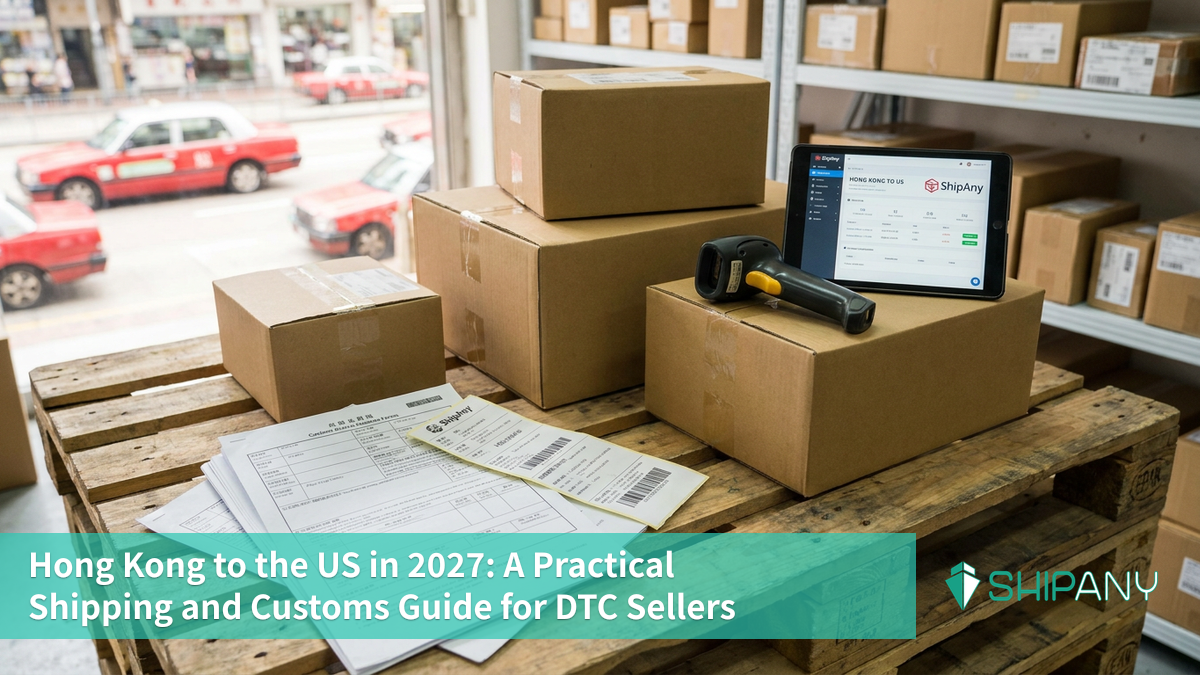
Hong Kong DTC sellers can ship to US customers more smoothly in 2027 by preparing accurate customs information, checking the rules and charges that apply to each product and shipment, and choosing a delivery service that fits the order. A complete shipment record helps the carrier and customs authorities assess the goods, while clear checkout and tracking information helps customers understand what to expect after dispatch.
What customs information should you prepare before shipping?
Prepare a commercial invoice and complete shipment data that describes the goods accurately; do not rely on a vague description such as “gift,” “sample” or “accessories.” For a parcel of phone cases, for example, identify the items as phone cases, state the quantity and actual sale value, and provide the currency. The invoice and the electronic declaration should tell a consistent story about what is being shipped, its value and the parties to the sale.
Record the buyer’s name and delivery address in full, along with the seller or shipper details, parcel weight and dimensions, and the reason for export, such as a sale. Include the product’s country of origin where required; shipping an item from Hong Kong does not by itself make Hong Kong its country of origin. A carrier or customs broker may request additional details, and requirements can vary with the goods, service and rules in effect when the parcel is dispatched. Check the selected carrier’s instructions before handover.
How should you classify products and check US import requirements?
Identify the product precisely and check its tariff classification and any import controls before setting a shipping price or promising delivery. The US Harmonized Tariff Schedule (HTSUS) is used to classify imported goods, but choosing a code can depend on material, construction, function and other product details. A cotton T-shirt and a polyester one, for instance, may need different classification analysis. Do not guess a code simply because a similar product used it on an earlier shipment.
Some product types may face requirements beyond ordinary customs information, including permits, safety rules, labelling or agency review. This can matter for items such as food, cosmetics, supplements, electronics or products containing regulated materials. Check the applicable US requirements for the exact product and consult a qualified customs professional when classification or admissibility is unclear. Rules can change, so review them for the shipment date rather than treating last year’s paperwork as a guarantee for 2027.
How can you plan duties, taxes and the customer’s payment?
Estimate import charges using the product classification, customs value, origin, shipment details and the rules that apply at dispatch; never assume that a parcel will be duty-free because of its value. US duty and other import charges can depend on the goods and the shipment method, and applicable thresholds or procedures may change. Confirm the current treatment for the specific order with the carrier, customs broker or relevant official guidance before publishing a landed-cost promise.
Decide who is responsible for import charges and communicate that choice at checkout. With a delivered-duty-paid arrangement (DDP), the seller arranges for applicable import charges to be paid as part of the delivery process, subject to the carrier’s service and setup. With a delivered-at-place arrangement (DAP), the customer may need to pay charges before delivery. Confirm the precise service terms rather than assuming that a label alone determines who pays. If the customer might receive a bill or be asked to provide information, say so plainly and factor possible delays into your delivery estimate.
Which delivery option should you offer US customers?
Choose a delivery service based on the parcel’s size, value, urgency, destination and the tracking or delivery features your customer expects. Express services can suit a time-sensitive order, while other international services may be a better fit for a less urgent parcel. A tracked service gives both seller and buyer visibility; check whether the option includes the scan events, delivery confirmation and customs handling you need. Compare the service conditions for the actual parcel rather than selecting by price alone.
Think through the full journey from your Hong Kong dispatch point to the customer’s US address. Check cut-off times, pickup arrangements, remote-area coverage, address requirements, declared-value limits and how the carrier handles customs queries or delivery exceptions. Pack goods to withstand international handling and make sure the parcel contents match the declaration. Set a realistic delivery window in your store and explain that customs review, incomplete information or other operational issues can affect transit time.
How can you manage labels, declarations and tracking in one workflow?
A shipping platform can bring order details, carrier selection, labels, declarations and tracking into a more consistent process. For a Hong Kong store receiving orders through an ecommerce platform, a connected workflow can reduce repeated entry of the same customer and parcel information. ShipAny can help merchants access delivery options and manage shipping tasks such as waybills and tracking in one workflow; the services available depend on the store setup, shipment and carrier. See E-commerce delivery service for the service overview.
Before buying a label, review the imported order data and correct missing or inaccurate product descriptions, values, weights and addresses. A platform can help organise information and produce shipping documents, but it cannot make an incorrect classification or declaration correct. Keep your product records and customs details up to date, check the selected carrier’s requirements, and retain the shipment and transaction records you may need to answer a query. Once dispatched, share the tracking link and respond promptly if a carrier requests clarification.
FAQ
Does shipping a product from Hong Kong mean it has Hong Kong origin?
No. The shipping location and the product’s country of origin are not necessarily the same. Provide origin information based on how and where the goods were made, and check the relevant origin rules if you are unsure.
Will every Hong Kong parcel sent to the US pay the same duty?
No. US import charges can vary with the goods, classification, value, origin, shipment method and rules in effect at dispatch. Check the specific order and service rather than relying on a fixed assumption or a past shipment.
What should a Hong Kong DTC seller put on a US commercial invoice?
A commercial invoice generally needs clear product descriptions, quantities, values and currency, along with shipper and recipient information and other shipment details requested for the service. Requirements vary, so confirm the selected carrier’s instructions and make the invoice consistent with the electronic declaration.
Can a shipping platform guarantee US customs clearance?
No. A shipping platform can help manage shipment information, labels and tracking, but customs authorities make clearance decisions. Accurate declarations, product-specific compliance checks and prompt responses to carrier or customs requests remain important.
Conclusion
For Hong Kong-to-US orders, dependable shipping starts with accurate product and shipment data, a checked duty plan and a delivery service suited to the customer’s needs. Review the requirements that apply at dispatch, make payment responsibility clear, and use a consistent workflow to prepare documents and keep customers informed.