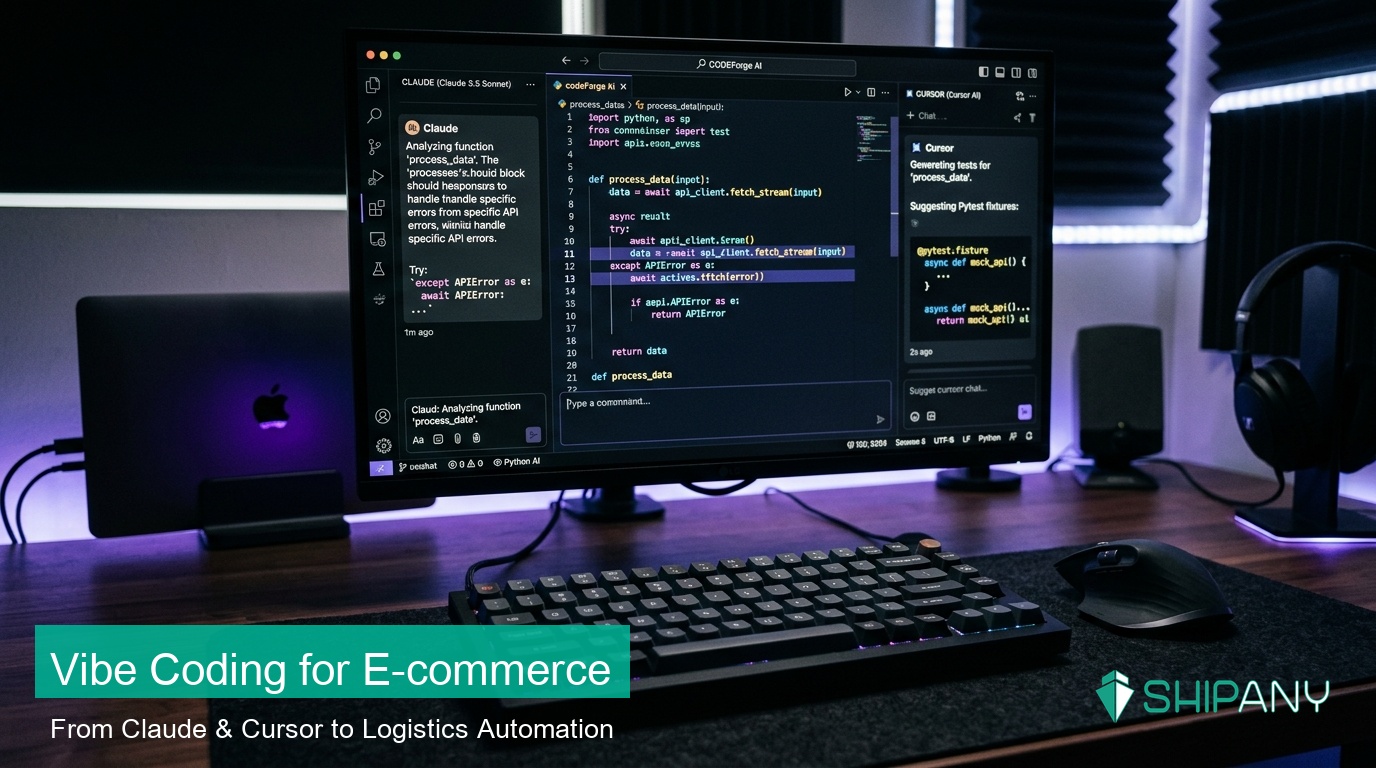
In the golden age of Vibe Coding, building an online store is no longer a technical barrier. Whether you are using Claude for logic construction, Cursor for rapid code completion, Codex for low-level logic, GitHub Copilot for automated deployment, or exploring architectural possibilities with ChatGPT and Gemini, the threshold for building professional e-commerce platforms has been shattered. Just a few precise prompts can generate a professional e-commerce UI in hours.
Real-world AI-Assisted Development: Pitfalls and Best Practices
While the speed of AI is incredible, many developers get lost in UI generation and ignore the underlying system architecture essential for a commercial-grade store. To build a robust platform in the Vibe Coding era, master these development tenets:
- Structure Over Features: Start by defining your Database Schema and State Machine. A robust state machine is the core of logistics automation; if your order status definitions (e.g., Pending, Fulfilled, In-Transit) are ambiguous, downstream automation will fail.
- Defensive Programming: AI models default to the “Happy Path.” You must force your AI agent to implement error handling—such as handling delivery timeouts or invalid address formats. This includes retry mechanisms and comprehensive error logging, which are non-negotiable for commercial applications.
- API Boundary Management: Do not hardcode logistics integration rules. Decouple your logistics logic into an independent module. This separation is what separates professional systems from quick prototypes.
- Data Consistency: AI can generate code for a shopping cart, but only a developer can ensure transactional consistency between orders and inventory. Always instruct your AI agents to ensure data integrity during logistics sync events to avoid reconciliation nightmares.
Chapter 1: The Criticality of Logistics Automation
A store with a perfect frontend but chaotic fulfillment is like a supercar with a rusted engine. When orders spike, manual tasks like label printing or status checking consume your energy, turning you from an e-commerce innovator back into a warehouse clerk. Logistics is the foundation of brand trust.
1.1 From “Running a Store” to “Automated Fulfillment”
Logistics is the core value chain of e-commerce. As your store scales, you need a system that processes hundreds of orders without fail.
– Data Pipeline: Order data should automatically flow into the fulfillment layer from the moment of purchase.
– Automation for Efficiency: True automation means you don’t spend time checking order IDs manually; the system filters priority orders and schedules dispatch automatically, freeing you to focus on growth and product strategy.
Chapter 2: The International Logistics Perspective
For international retailers, logistics efficiency is the backbone of your ability to scale globally.
2.1 Optimizing Global Fulfillment
The international logistics landscape is fragmented. Success requires a sophisticated fulfillment architecture that handles regional variations—whether it’s managing duty declarations, tracking international transit, or ensuring delivery speed across time zones.
2.2 Operational Excellence
- Automated Tracking: Ensure customers have real-time visibility into their orders without you needing to respond to “where is my package” emails.
- Dispatch Intelligence: Automatically route orders to the most cost-effective and reliable courier based on destination and package dimensions.
Chapter 3: Why AI Developers Struggle with Logistics
The biggest hurdle isn’t the technical connection; it’s managing changing commercial rules. Logistics providers update their systems frequently; if you “self-code” your integration, you become a permanent logistics rule-maintainer.
ShipAny acts as your “Logistics Shield,” bridging the gap between your automated store and complex international courier requirements. It simplifies the integration into a stable system link, automating label generation and tracking synchronization. This reduces your technical debt and ensures fulfillment remains stable during peak volume spikes.
Chapter 4: Practical Implementation
As a Vibe Coding developer, your integration workflow should be:
1. Trigger Logistics: Push Shopify orders directly to ShipAny via data linking.
2. Automated Manifesting: Trigger label generation upon payment completion, eliminating manual work.
3. Customer Loop: Push tracking updates back to your store to keep customers engaged.
FAQ
How can I integrate logistics fastest when using Vibe Coding tools?
Use a unified system like ShipAny that integrates directly with major carriers, reducing the technical overhead of direct API maintenance.
Why is manual integration risky for developers?
Logistics providers update rules constantly. Managing these rules yourself consumes the very time you saved by using AI development tools.
Can logistics automation handle complex cross-border rates?
Yes. ShipAny provides precise rate estimation, returning optimized shipping rates in real-time, allowing you to optimize your profit margins at checkout.
Conclusion
In the Vibe Coding era, build speed is no longer the bottleneck—value management is. Delegate the logistics complexity to ShipAny. Transform your store from a simple website into a revenue-generating engine. Start optimizing your logistics pipeline today and prepare for the next stage of global growth.