In the competitive landscape of Hong Kong e-commerce, the efficiency and flexibility of logistics delivery are often the keys to determining customer retention. As consumer demands for flexible pick-up times and locations grow more stringent, leveraging SF Express pick-up points (including smart lockers and retail points) has become an essential core strategy for brand sellers to optimize their delivery processes. This article provides an in-depth analysis of the logistics value of SF Express pick-up points and explores how to maximize operational efficiency through automated logistics systems.
The Current E-commerce Logistics Landscape and Challenges in Hong Kong
Hong Kong’s e-commerce environment is characterized by high density and a fast pace. While consumers are accustomed to online shopping, their expectations for delivery methods are high. Traditional door-to-door delivery often faces challenges regarding unsuccessful delivery attempts or scheduling conflicts, and “uncertainty in receipt” frequently leads to decreased customer satisfaction. For small and medium-sized e-commerce sellers, how to provide highly flexible pick-up options within limited manpower and budget has become an important threshold for maintaining competitiveness.
The Logistics Value of SF Express Pick-up Points
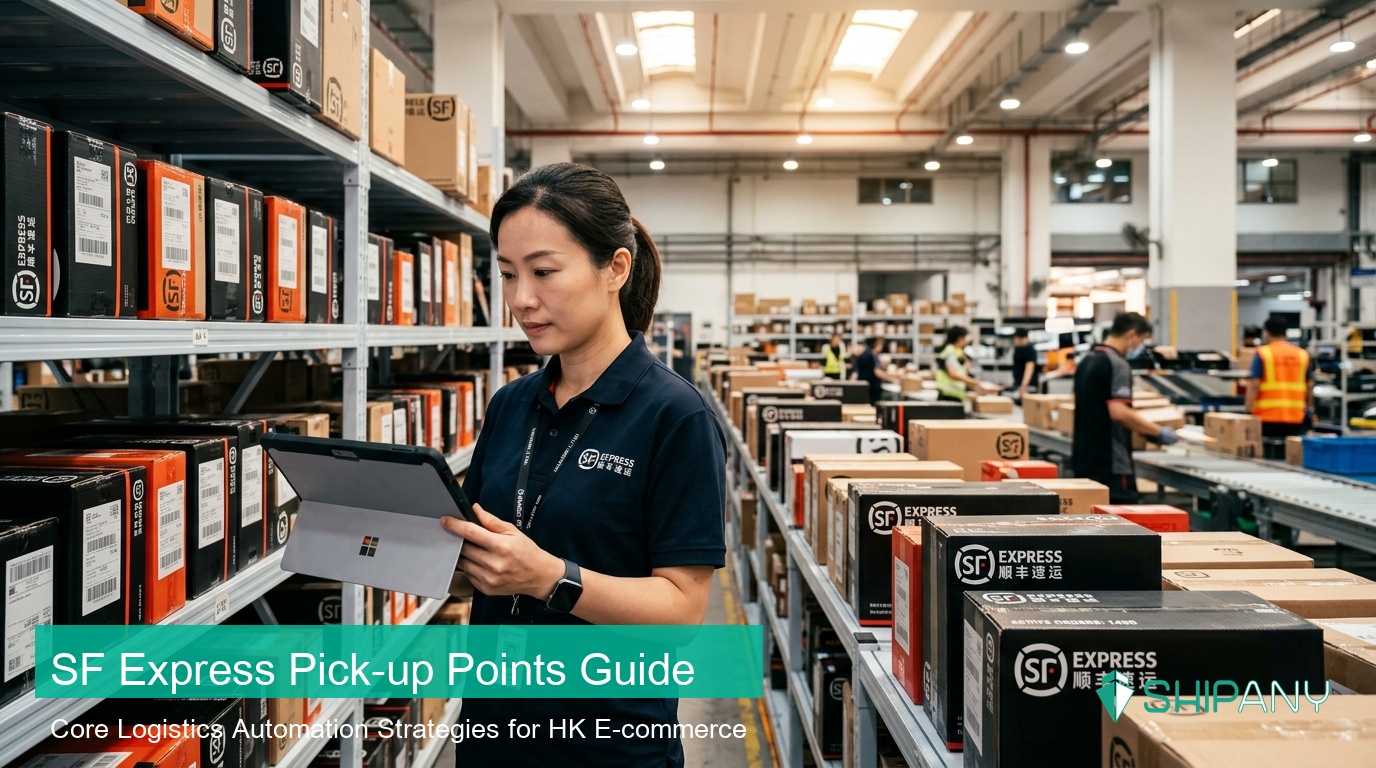
SF Express pick-up points (including SF smart lockers and retail outlets) boast extremely high coverage in Hong Kong. Their core value lies in providing “pick-up freedom,” where consumers are no longer limited by the delivery time of couriers and can collect their parcels at their convenience, such as after work or during leisure time. This not only reduces the rate of unsuccessful deliveries but also significantly improves the shopping experience. For sellers, offering these choices is not only an effective means to reduce logistics costs but also a key to increasing conversion rates.
Core Strategies for Logistics Automation
To fully leverage the advantages of SF Express pick-up points, manual order management is no longer sufficient. As order volumes grow, logistics automation becomes a prerequisite for brand growth. Through professional logistics solutions like ShipAny, sellers can:
– Achieve Automated Order Synchronization: When customers place an order on the online store and select a pick-up point, the system automatically acquires relevant information, reducing human transcription errors.
– Batch Generation of Waybills: By integrating the SF Express API, sellers can process fulfillment requirements for hundreds or thousands of orders at once, saving substantial administrative time.
– Unified Logistics Dashboard: Sellers can monitor the delivery status of all parcels on a single interface, from warehouse entry to arrival at the pick-up point, ensuring total transparency throughout the process.
Optimizing Operational Efficiency and Cost Control
Beyond fulfillment efficiency, logistics automation also has a decisive impact on cost control. Through systematic delivery data analysis, sellers can:
– Optimize Delivery Routes: Analyze the popularity and delivery efficiency of different pick-up points to optimize inventory placement and fulfillment logic.
– Accurate Logistics Budget Analysis: Detailed freight reports provided by the system assist sellers in analyzing delivery costs across different districts, thereby adjusting product pricing or promotional strategies to ensure profit margins.
– Reduce Risk of Loss: Automated fulfillment processes reduce reliance on manual paper labels, drastically lowering the probability of parcel delivery errors or losses.
Building Efficient Post-Fulfillment Automation
Finally, post-purchase experience is the key to building brand loyalty. Automated systems help sellers achieve the following in the logistics process:
– Proactive Notifications: Once a parcel arrives at a pick-up point, the system automatically sends an SMS or Email notification to the customer, reducing the frequency of customer inquiries regarding “where my parcel is.”
– Transparent Status Tracking: Allow consumers to grasp logistics information at any time, increasing their sense of security and trust after purchase.
– Professional Return Management: When consumers have return or exchange needs, automated platforms handle reverse logistics more quickly, minimizing negative experiences.
Frequently Asked Questions (FAQ)
Why are SF Express pick-up points more suitable for Hong Kong e-commerce compared to traditional delivery?
SF Express pick-up points solve the issue of “scheduling difficulties” for Hong Kong consumers. With wide coverage and stable operations, they significantly reduce extra costs incurred from unsuccessful delivery attempts and remain the top choice for e-commerce delivery in Hong Kong.
How to start implementing a logistics automation system?
Sellers can start by evaluating their current order volume and manual processing time, and then try out platforms like ShipAny, which have already integrated multiple logistics APIs, usually enabling process optimization within a week.
Is logistics automation suitable for early-stage sellers with lower order volumes?
Yes. Logistics automation helps sellers establish good data management habits from the early stages, not only saving time for business expansion but also laying a solid foundation for future rapid growth.
Conclusion
In the competitive Hong Kong e-commerce market, delivery efficiency and experience are often the keys to a seller’s success. By integrating SF Express pick-up points and implementing ShipAny’s logistics automation solutions, sellers can not only alleviate heavy logistics administrative burdens but also provide consumers with the highest quality pick-up choices, thereby enhancing overall operational effectiveness and brand reputation.