
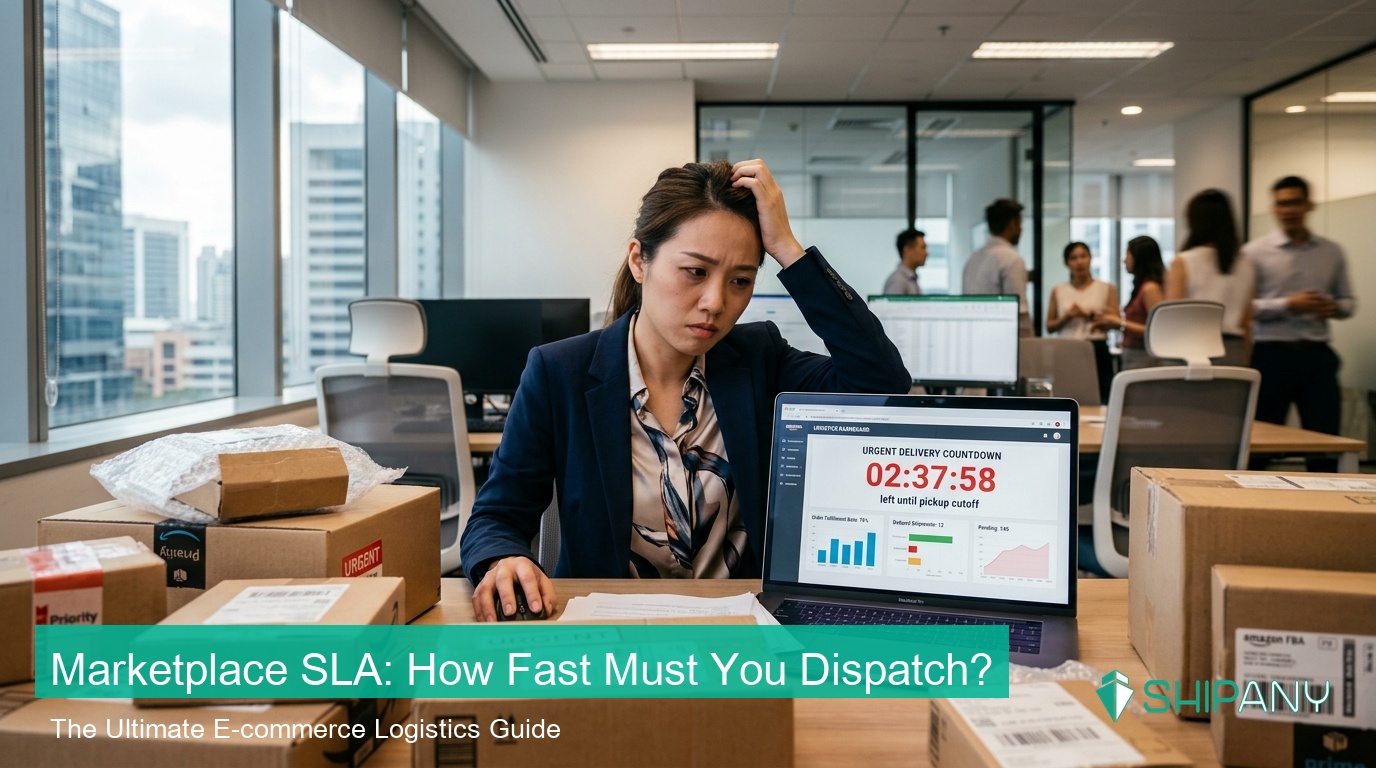
In cross-border e-commerce operations, many sellers often ask: “Within how many days must I dispatch the goods?” This is not only an operational efficiency issue for warehousing, but also a key indicator concerning marketplace traffic and account health. Marketplace SLA (Service Level Agreement) stipulates the time limit from when an order is placed to when the goods are successfully handed over to the logistics provider. If a seller fails to meet the standard, they will not only face points deduction but may also have their traffic restricted by the marketplace, causing sales to plummet.
Why is Marketplace SLA the Lifeline of E-Commerce Operations?
The strict monitoring of SLA by e-commerce platforms is essentially to safeguard the Buyer Experience. In the modern e-commerce environment, after consumers place an order on HKTVmall, their psychological expectation has evolved from “getting it” to “getting it fast”. If a seller is slow in shipping, buyers are likely to give negative feedback, apply for refunds, or even lodge complaints. This is a disaster for the shop: negative reviews not only affect the conversion rate, but will also cause the platform algorithm to flag the shop as “not recommended”, leading to a drop in traffic weight and lower search visibility.
In the long run, SLA stability is a core indicator for measuring the maturity of an e-commerce team. Excellent sellers can not only deliver orders on schedule, but can also build long-term trust with buyers in the brand through precise logistics lead time management. Now that the traffic dividend period has passed, a good logistics experience is exactly the key to retaining customers and increasing the repurchase rate. When your SLA data is outstanding, the platform will even proactively include your products in official recommendations, forming a positive cycle where “logistics boosts traffic”.
Marketplace Mainstream Platform Dispatch Requirements (SLA) in Various Regions
In the Hong Kong market, HKTVmall pursues an extremely high standard of logistics and service quality, striving to provide consumers with the ultimate shopping experience, and has explicit regulations for third-party merchants regarding dispatch lead times and logistics connection. HKTVmall not only requires shipping speed, but also has strict standards for the “logistics delivery rate”. If cross-border sellers fail to effectively connect with local logistics, they are highly prone to account points deduction due to delays by logistics providers. Sellers need to precisely control their dispatch rhythm on HKTVmall to ensure every single order enters the logistics provider’s delivery network on time.
“Within how many days must I dispatch?”: Sellers’ Most Common Doubts and Pitfall Avoidance Guide
Sellers often ask: “Does clicking ‘Ship’ mean it’s completed?” The answer is no.
The key point determined by the marketplace system is usually the “logistics provider scan”. Simply clicking ship in the backend and printing the shipping label is not enough. If the parcel is just piled up in the warehouse and has not been handed over to the courier for the initial scan, the system will still treat it as a late dispatch. The correct shipping flow includes: Order placed -> Picking -> Packing -> Attaching the correct tracking label -> Logistics personnel complete the initial scan.
In this process, the biggest pitfalls to avoid lie in:
1. The time gap between printing the shipping label and physical handover: Many sellers print a large number of shipping labels at once for convenience, but the logistics provider’s pickup speed cannot keep up, resulting in parcels “waiting to be born” in the warehouse beyond the SLA limit.
2. Cut-off time trap: Many platforms stipulate a daily cut-off time. If you print the shipping label after the cut-off time, the system will defer the order to the next working day.
3. Holidays and the platform’s calculation methods: Some platforms deduct public holidays when calculating SLA, while others do not. Sellers must read the logistics policies in the Seller Center of each platform in detail.
How to Avoid Points Deduction and Fines?
To maintain a high-efficiency SLA, sellers need to establish a “Standard Operating Procedure (SOP)”. It is recommended to optimize from the following points:
1. Digitalized Inventory Management
Avoiding “overselling” is the first line of defense. When an order is forced to be cancelled due to out-of-stock issues, the SLA is immediately deemed a failure. Through an automated inventory system, inventory across various platforms can be unified to ensure online inventory is synchronized with physical inventory.
2. Optimize Packing Workflows and Workstation Design
Set up dedicated Packing Stations to reduce the walking distance of picking staff within the warehouse. Workflow optimization can significantly shorten the time from receiving an order to completing the packing.
3. Logistics Provider Connection and Pickup Scheduling
Regularly confirm pickup times with logistics providers. Before mega campaign periods, be sure to communicate with logistics providers to ensure there are sufficient pickup slots and time flexibility, which is an invisible cost most frequently overlooked by many novice sellers.
ShipAny Automated Dispatch Solution
Manually processing multi-platform orders is the number one killer of SLA. ShipAny provides a one-stop automated solution to upgrade logistics efficiency for sellers:
- Omnichannel Order Aggregation: Automatically import orders from major platforms into a single backend without switching between multiple backends, drastically reducing manual operational errors.
- One-Click Bulk Printing: Support integrated printing of cross-platform orders, lowering labor costs and repetitive operation time.
- Proactive Status Synchronization: Push logistics progress back to the platforms in real time to ensure the system automatically updates the status, meeting the SLA requirements of all platforms.
For more details, please refer to: ShipAny Automated Shipping Service.
Logistics Preparation Strategy for Mega Campaigns (Big Sale Days)
Facing mega campaign periods, dispatch volume often surges exponentially, posing a massive challenge to SLA. Recommendations:
1. Advance Scheduling and Roster Expansion: Workforce planning needs to be completed two weeks before the mega campaign, increasing packing staff and temporary customer service.
2. Prepare Packaging Materials in Advance: Ensure the stock of packaging materials (cardboard boxes, tape, cushioning materials) is sufficient to handle 15 days of dispatch demand, avoiding dispatch stagnation due to lack of packaging materials.
3. Batch Handover Strategy: Do not pile up the entire batch of orders until evening to hand over to the logistics provider. Adopt a “small quantities, multiple times” handover approach so that the logistics provider can scan them into the warehouse early. This can significantly reduce the risk of system points deduction caused by delays on the logistics side.
Advanced: How to Turn SLA Management into a Marketing Advantage?
Many sellers view SLA as a burden, but if you can take this to the extreme, it can become your “selling point”. Clearly stating “This store guarantees to complete the initial logistics scan within 24 hours” is a powerful endorsement of trust for customers who have extremely high requirements for logistics speed. This is not just a logistics standard, but your brand guarantee.
Logistics Optimization Supported by Big Data: Data-Driven Logistics
Through ShipAny’s data dashboard, you can analyze the fulfillment rate of each logistics provider, logistics peak forecasts, and quickly filter abnormal orders, making logistics data fully transparent, allowing SLA management to become a predictable and controllable KPI. Data-driven management is the core key to moving from an individual seller to an e-commerce enterprise.
Frequently Asked Questions (FAQ)
What is Time to Dispatch? Is it the same as delivery to the customer’s hands?
No. Time to Dispatch refers to the time it takes after you receive an order to hand the parcel over to the logistics provider and have it scanned into the warehouse. Delivery to the customer’s hands is “Delivery Time”, which is the shipping speed of the logistics provider. Although sellers cannot directly control the transit process, a good dispatch ensures the parcel leaves earlier, allowing more buffer room for the transit time.
Why does the system show I am late in dispatching even though I have clearly packed the goods?
The most common reason is the “lag in the logistics provider’s scan time”. Although you have completed the packing, if the parcel is still in the warehouse and has not been scanned for pickup by the courier, the platform system will deem that you have not dispatched it yet. It is recommended to negotiate daily pickup times with the courier to ensure parcels complete the scan before the cut-off time.
What can sellers do to strive for exemption if they encounter a delayed pickup by a logistics provider?
If the delay is caused by non-seller factors, please be sure to keep communication records with the logistics provider (such as pickup screenshots, conversation history), and submit evidence through the platform’s appeal channels to prove the delay was caused by the logistics provider, in order to apply for a points deduction waiver.
Conclusion
In the world of cross-border e-commerce, speed is competitiveness. When you understand and precisely grasp the SLA requirements of various marketplaces, combined with ShipAny‘s automated logistics system, you can not only effectively avoid unnecessary fines, but also make your store a high-efficiency, premium seller in the eyes of the platforms. Starting today, review your dispatch flow and let logistics become a powerful engine driving your business growth through systematic management.