
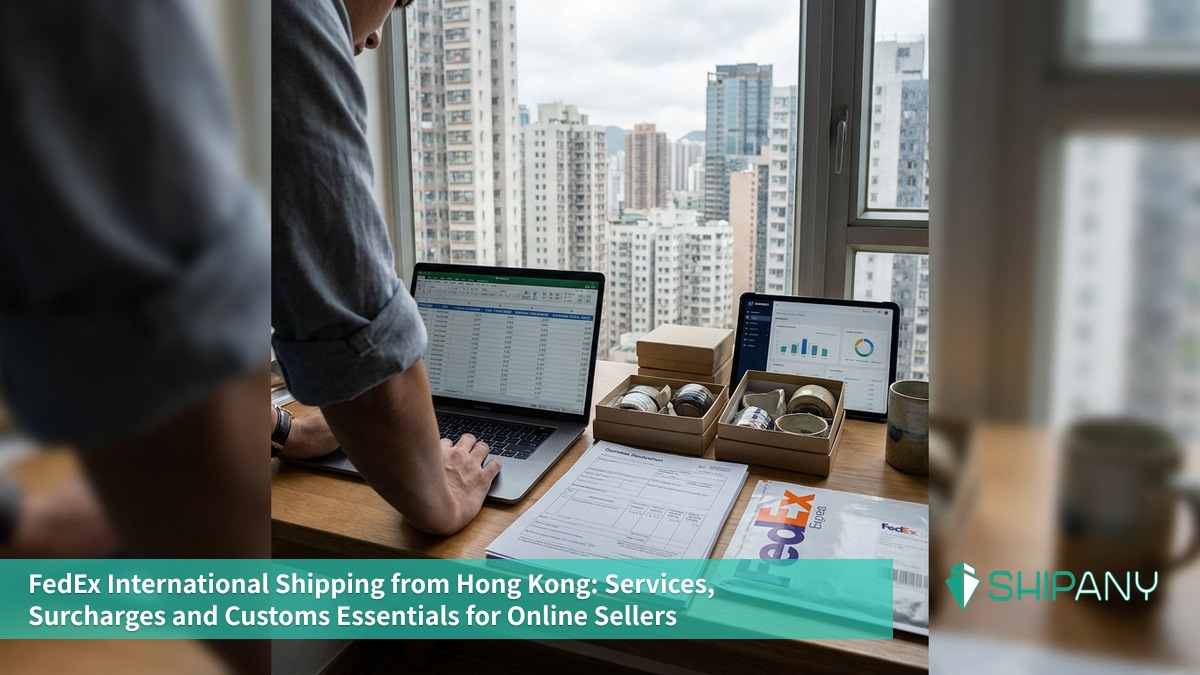
FedEx offers Hong Kong-based online sellers several international shipping options, from time-definite express services to more economical choices for shipments that can take longer. The right service depends on the destination, parcel dimensions, delivery expectations and the charges that apply when you book and ship—not just the headline transport price.
This guide explains what to check when choosing a FedEx service from Hong Kong, preparing an overseas order and reviewing customs documents and surcharges. It also covers how ShipAny can bring courier tasks into one workflow, so your team can spend less time entering the same order details in different places and more time checking the shipment before it leaves.
Which FedEx international service should a Hong Kong seller choose?
Choose a FedEx service by matching the delivery commitment and destination coverage to the customer’s needs, then confirm the available options for the specific Hong Kong origin and destination. FedEx International Priority is designed for time-sensitive international shipments, while FedEx International Economy is generally intended for less urgent shipments. Exact transit times, delivery commitments, service availability and cut-off times depend on the route and shipment details, so check the current FedEx service information before promising a delivery date.
For example, a Hong Kong skincare brand sending a replacement product to a customer in the United States may prioritise a faster service, while a non-urgent order to the United Kingdom may suit a more economical option if the customer accepts a longer delivery window. Compare the options against the product’s value, size and delivery promise. A service name alone does not confirm that a particular destination, package type or delivery address is eligible.
What shipment details should I check before booking?
Check that the recipient, parcel and product details are complete and consistent before creating a label. Use the recipient’s full name, a deliverable street address, postal code, country and reachable phone number or email where requested. Confirm the number of packages, actual weight and dimensions, and enter accurate measurements; the carrier may assess charges using dimensional weight when it exceeds actual weight.
Describe each item clearly rather than using broad terms such as “gift,” “sample” or “goods.” For instance, identify a cotton T-shirt, a phone case or a face cream by its ordinary product description, quantity and material where relevant. Provide the correct value and currency, and make sure the information on the shipping label agrees with the commercial invoice and order record. Check for restricted or prohibited goods before booking: batteries, liquids, cosmetics, food and other regulated products may have specific packing, documentation or service requirements.
Which customs documents do international DTC orders need?
Most international merchandise shipments need an accurate commercial invoice, and the information must match the parcel and electronic shipment data. The invoice typically identifies the exporter and recipient, describes the goods, states quantities and values, and includes the country of origin and reason for export. Add the relevant currency and any other details requested by FedEx or the destination’s customs authority. A clear description such as “women’s cotton shirt” is more useful than “clothing.”
Depending on the goods and destination, additional permits, certificates or declarations may be required. The correct tariff classification, commonly expressed as an HS code, can affect customs processing and the duties or taxes assessed. Do not guess an HS code or country of origin; verify product information with a qualified customs adviser or official source when unsure. The destination’s rules determine import requirements, and customs authorities—not the carrier—make clearance decisions. Check whether the shipment terms make the buyer or seller responsible for import charges, and communicate that arrangement clearly at checkout.
How should sellers review FedEx surcharges and total shipping cost?
Review the full shipment charge rather than relying on a base rate, because fuel, demand and other applicable surcharges can change or depend on the parcel and route. FedEx publishes service guides and surcharge information; check the current Hong Kong rates and terms when quoting, and verify the final charge against the shipment details. Fuel surcharge calculations and updates may vary over time, while demand-related surcharges may apply to eligible services, destinations or shipment types during specified periods.
Other charges can arise from characteristics such as package dimensions, address type, additional handling, remote delivery or customs clearance. Applicability depends on current FedEx rules and the shipment, so do not assume every order will incur the same extras. Keep an eye on the billed weight, dimensions, destination and service selected, and compare the invoice with the details entered at booking. For a DTC business, building a reasonable allowance for variable charges into shipping decisions can help avoid quoting customers a price that no longer reflects the likely cost.
How can ShipAny simplify FedEx shipping and document checks?
ShipAny can help Hong Kong merchants bring order information, shipping tasks and shipment documents into a more consistent workflow. Instead of re-entering customer and parcel details across separate systems, sellers can connect their store through an available integration and use ShipAny to manage supported shipping steps, such as reviewing service options, preparing waybills, arranging pickup and tracking parcels. Available carriers and functions depend on the merchant’s setup and the services enabled for the shipment.
Before confirming an overseas order, a seller can use a [shipping calculator](/en/calculator/) to compare available shipping quotes, then review the shipment details and documents together as part of the fulfilment process. This does not replace checking FedEx’s current surcharge rules, destination customs requirements or the accuracy of product data. It can, however, reduce repeated manual entry and make it easier for a team to spot missing values, inconsistent descriptions or an unexpected cost before the parcel is handed over. For cross-border shipping workflows, see [international express logistics](/en/international-express-logistics-services/).
FAQ
Can a Hong Kong online seller use FedEx for international orders?
Hong Kong-based sellers can use FedEx international services for eligible shipments to destinations served by the selected service. Availability, transit estimates and shipment requirements depend on the origin, destination, goods and service. Confirm the current route options with FedEx before making a delivery promise.
Does every FedEx international parcel need a commercial invoice?
A commercial invoice is commonly required for international merchandise shipments so customs authorities can assess the goods. Requirements can vary with the destination, shipment type and contents, and additional documents may be necessary. Make sure the invoice agrees with the shipping data and describes the goods specifically.
Why did my FedEx shipping charge change after booking?
A final FedEx charge may differ from an initial estimate if the measured weight or dimensions differ, or if a surcharge or other applicable fee is assessed. Fuel and demand surcharges can change, and additional charges may depend on the route, package or delivery address. Review current FedEx terms and compare the billed shipment details with the information entered when booking.
Can ShipAny prepare customs information for my FedEx order?
ShipAny can help organise shipping information and supported shipment documents within a fulfilment workflow, depending on the merchant’s setup and available services. The seller remains responsible for providing accurate product descriptions, values, origin and other required customs information. Check destination rules and FedEx requirements before dispatch.
Conclusion
For Hong Kong DTC sellers, reliable FedEx international shipping starts with choosing a service that fits the order, entering accurate parcel and product details, and preparing customs paperwork that matches the shipment. Check changing surcharges and the destination’s import requirements before quoting or dispatching.
ShipAny can help reduce repetitive shipping tasks and make order information, quotes and documents easier to review in one workflow. A careful final check still matters: it is the best way to catch avoidable delays and cost surprises before a parcel leaves Hong Kong.