
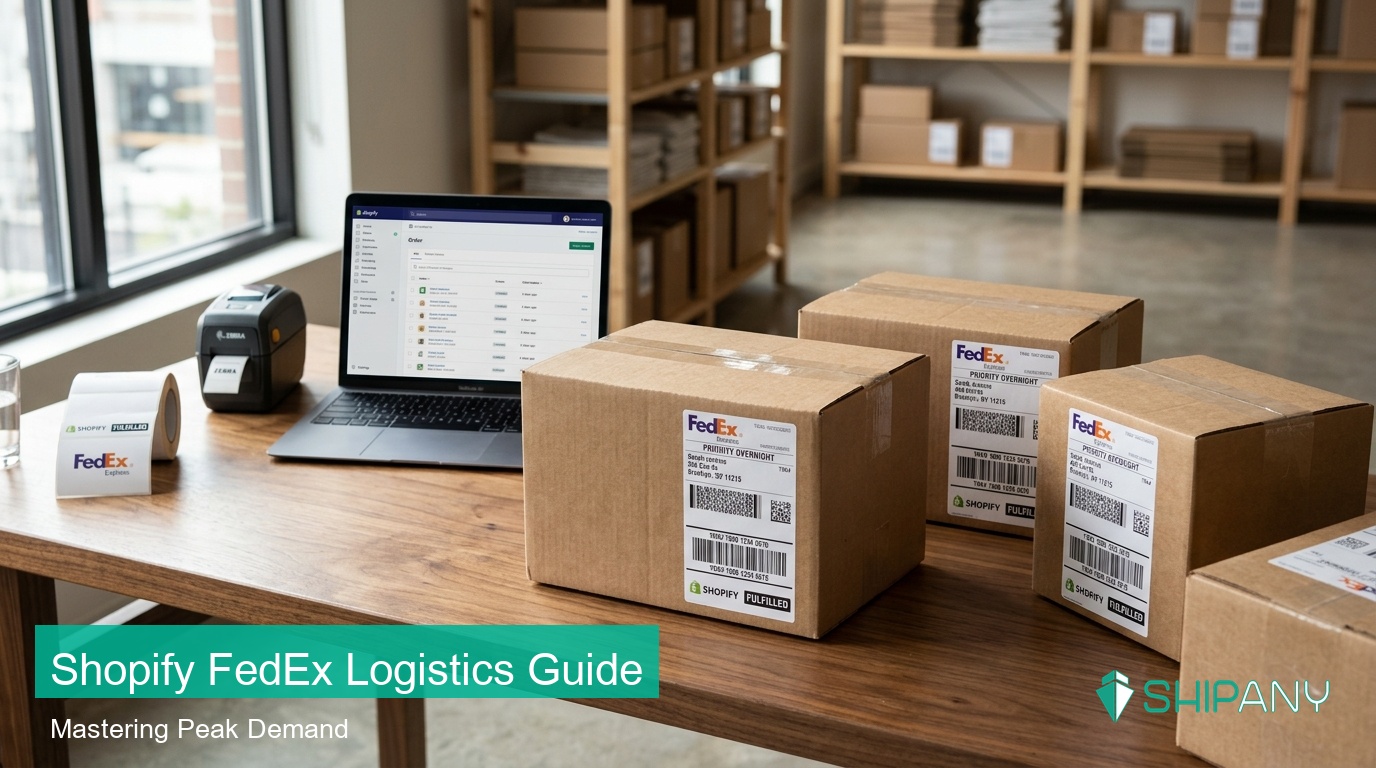
For merchants running Shopify stores globally, the daily operational nightmare isn’t just advertising or product sourcing—it’s the mounting pile of FedEx shipping labels waiting to be printed. During peak seasons, when orders pour in, the initial excitement is often overshadowed by the looming dread of fulfillment hell. Integrating your Shopify store with FedEx to achieve full logistics automation isn’t just about saving time; it’s a strategic defense of your profit margins and brand reputation.
This guide moves beyond cold, technical integration details. We focus on real-world strategy: how to leverage intelligent logistics architecture to drive down FedEx shipping costs while making your fulfillment pipeline as smooth and automated as a high-tech assembly line.
Why Logistics Automation is Non-Negotiable for Shopify Merchants
Many merchants start by manually creating shipping labels, thinking it’s sufficient for a manageable order volume. However, as your business scales, or when you face massive surges like the latest iPhone 18 launch, this manual approach becomes the single greatest bottleneck to your growth.
The core value of logistics automation is the total elimination of repetitive, error-prone labor. When you no longer need to copy and paste customer addresses into a separate courier system, your fulfillment time per order drops from minutes to mere seconds. This speed doesn’t just improve throughput; it ensures total accuracy. In the world of premium accessories, a mislabeled package or an incorrect delivery address is a brand-killing event that consumes more time, money, and customer goodwill than any logistics integration fee.
Optimizing Profitability: The Hidden Space in Logistics Costs
Many merchants wrongly assume that international express couriers like FedEx are inherently too expensive. In reality, logistics cost is often a function of your strategic fulfillment planning.
If your Shopify shipping settings are too generic, you either overcharge and lose conversions or undercharge and erode your own margins. By integrating advanced shipping intelligence, your store can calculate real-time, optimized FedEx rates based on precise parcel dimensions and weight the moment a customer hits checkout. This eliminates overcharging errors and allows you to build a sophisticated “Free Shipping Threshold” strategy, which is one of the most effective tools for increasing Average Order Value (AOV).
Brand-Centric Logistics: The “Post-Purchase” Experience
The moment a customer places an order, the most important question in their mind is: “Where is my package?” If you leave them in the dark for five days until the box arrives, you’ve missed a massive opportunity to build customer loyalty.
By using Shopify’s automated workflows, you can turn logistics updates into a core part of your brand experience. Every time a FedEx tracking event updates, your store can automatically send branded, thoughtful messages or links to a live tracking map. This level of transparency dramatically reduces customer support tickets and keeps the customer engaged with your brand throughout the shipping journey.
FAQ
How does logistics automation impact my Shopify Store’s AOV?
By ensuring your shipping rates are accurate and optimized, you gain the confidence to implement aggressive “Free Shipping” tiers that encourage customers to add more items to their carts, effectively driving up AOV without hidden shipping losses.
How should I adjust my logistics when order volumes double overnight?
The secret is operational elasticity. You must prepare a “pre-fulfillment” workflow and ensure your systems handle automated label generation, allowing your team to focus exclusively on quality control and premium customer service rather than rote data entry.
How should I set shipping strategies in the Shopify checkout?
Implement a tiered shipping model based on product value. Offer customers a choice of service levels, ensuring that your automated system balances the customer’s expectation for speed against your business need for cost-efficient fulfillment.
Conclusion
Integrating Shopify with FedEx to achieve full automation is more than just a tech upgrade; it is a critical investment in your business’s scalability. Logistics efficiency is the backbone of your ability to expand globally. Start optimizing your pipeline today and prepare your brand for its next stage of global growth.