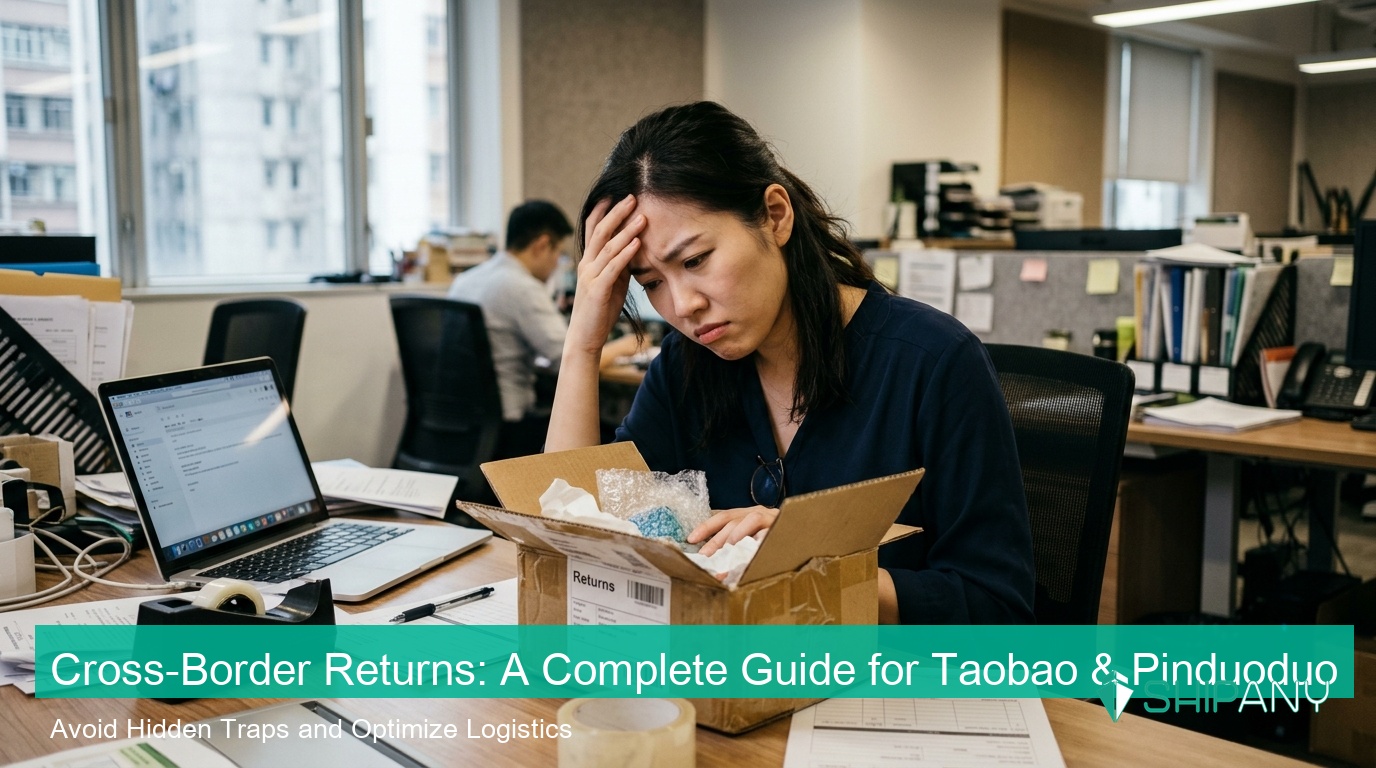
In Hong Kong, shopping on mainland e-commerce platforms like Taobao and Pinduoduo has become a daily habit. From home goods and clothing to electronics, the rich variety of products and competitive prices are hard to resist. However, the biggest fear in online shopping is receiving incorrect items or finding the size doesn’t fit. When it comes to returns, many Hong Kong consumers realize that cross-border returns are a patient test: complex courier processes, mainland customs declaration regulations, and varying shipping costs often lead many to choose to “suffer the loss.”
In fact, cross-border returns are not impossible; the key lies in understanding the logic behind them. This article provides a comprehensive guide to practical knowledge for returning goods from Hong Kong to the mainland and discusses how to use logistics tools to make the return process clearer.
Why are cross-border returns challenging?
For Hong Kong consumers, returning goods to mainland sellers or consolidation warehouses is far more complex than local returns, primarily facing three major practical challenges:
1. Customs declaration and restrictions (most common trap)
Cross-border packages must undergo strict customs inspection. Mainland customs have clear declaration requirements for imported goods, including ID verification and product classification. Many common items, such as electronics with built-in batteries, liquids, cosmetics, or certain food items, are easily classified as prohibited. If not confirmed in advance, packages may be seized or forcibly returned upon reaching customs, leading to indefinite refund delays and wasted shipping costs.
2. Courier channels and recipient restrictions
Many couriers have numerous restrictions when handling “private shipments to the mainland.” Some couriers don’t accept casual individual shipments, others cannot deliver to remote e-commerce warehouses, and packages may be refused due to improper address details or the inability to contact the mainland recipient.
3. Time efficiency and information asymmetry
The cross-border return logistics chain is long, involving shipping from HK, customs clearance, mainland transit, and final warehouse sign-off. Without transparent tracking, it is difficult for consumers to hold sellers accountable if a package “disappears” at customs or transit hubs, leading to endless refund delays.
These pain points often lead consumers to give up because the “time and communication cost of returning outweighs the value of the item.”
Finding a solution: How to use logistics tools to assist cross-border returns?
Facing a complex cross-border logistics network, the traditional approach is to inquire about shipping costs and prohibited item lists with each courier individually, which is time-consuming. To bridge this information asymmetry, using a smart logistics integration platform like ShipAnyGO can serve as an auxiliary tool for evaluating return solutions and significantly optimizing the experience.
How can a logistics integration platform help?
- Multi-channel comparison: The platform integrates various logistics networks, allowing you to clearly compare estimated shipping costs and delivery times for different couriers, saving the trouble of inquiring one by one.
- Logistics status tracking: Provides relatively clear status updates, allowing you to grasp the approximate transportation progress of the package at any time as strong evidence when communicating with e-commerce sellers.
- Flexible handover options: Provides door-to-door pick-up or designated pick-up point drop-off, flexibly matching the daily routines of Hong Kong consumers.
⚠️ Practical Tip: The reality of cross-border logistics
Please note that cross-border logistics involves both mainland customs policies and end-to-end local courier cooperation. Even with a smart platform, delivery times may still be delayed due to customs clearance efficiency, weather, or peak e-commerce sales seasons (like 11.11). Furthermore, if the item falls into a restricted category, there is still a risk of it being returned by customs. Please carefully verify declaration information before shipping.
Three standard steps for cross-border returns
To complete a return successfully, it is recommended to follow this professional process:
- Reach a consensus with the seller (Crucial first step)
Before initiating the return, ensure you have applied for the return on the Taobao or Pinduoduo backend and obtained a complete mainland receiving address, contact name, and phone number from the seller. Also, confirm with the seller whether this address accepts regular courier delivery to avoid secondary shipping due to address issues. - Verify item attributes and packaging
Check if the item contains batteries, liquids, or powders. Pack the item securely with its original packaging to prevent damage during long-distance transit. If the packaging is incomplete, the seller has the right to refuse the parcel. - Choose the right shipping channel
You can use the ShipAnyGO website or its WhatsApp service to input return information to compare different logistics solutions, schedule suitable door-to-door collection, or head to a drop-off point to generate the waybill and ship it out.
Advanced advice: How to increase cross-border return success rates?
In addition to basic logistics steps, it is recommended that consumers inquire about the store’s “return policy” before purchasing high-value or special items. Some sellers mark “7-day no-reason returns” on e-commerce platforms, but the cost of cross-border shipping is sometimes borne by the consumer. Confirming this in advance helps avoid unnecessary disputes later. Additionally, keeping shipping receipts and tracking codes is the best way to ensure you can communicate with logistics companies and provide evidence if the parcel is delayed.
For frequent cross-border shoppers, building your own “clearance checklist” is also very useful. Regularly recording which products are easily restricted (like cosmetics, items with batteries) allows you to avoid these hidden traps next time, reducing the need for returns from the start.
Frequently Asked Questions (FAQ)
Q: How long does a cross-border return usually take?
Generally, from shipping out of Hong Kong to sign-off at the mainland warehouse, it takes about 3-5 working days. Note, however, that actual time depends on customs clearance efficiency, extreme weather, or mainland public holidays. It is recommended to reserve sufficient time and closely monitor logistics updates.
Q: Which items are easily blocked during cross-border returns?
Due to strict customs regulations, items containing batteries (like powerbanks, wireless headphones), liquids, flammable goods, or regulated ingredients are considered sensitive or prohibited items. Before arranging shipment, it is recommended to read the relevant forbidden item guidelines to avoid delaying return time.
Q: Who should bear the return shipping cost?
This depends on the outcome of your negotiation with the seller on the platform. If it’s a quality issue (defective goods), you can usually request the seller to bear the shipping cost (some sellers provide return shipping insurance); if it’s personal preference (wrong size, didn’t like it), the buyer usually bears the cross-border shipping cost. It is recommended to confirm shipping cost subsidies with the seller before shipping.
Conclusion
Online shopping should be a pleasant experience. Understanding the rules and potential risks of cross-border logistics is the first step in protecting your consumer rights. Next time you encounter an item that doesn’t fit on Taobao or Pinduoduo, keep your patience, and use appropriate logistics tools like ShipAnyGO as a reference and aid to find the most suitable return solution.