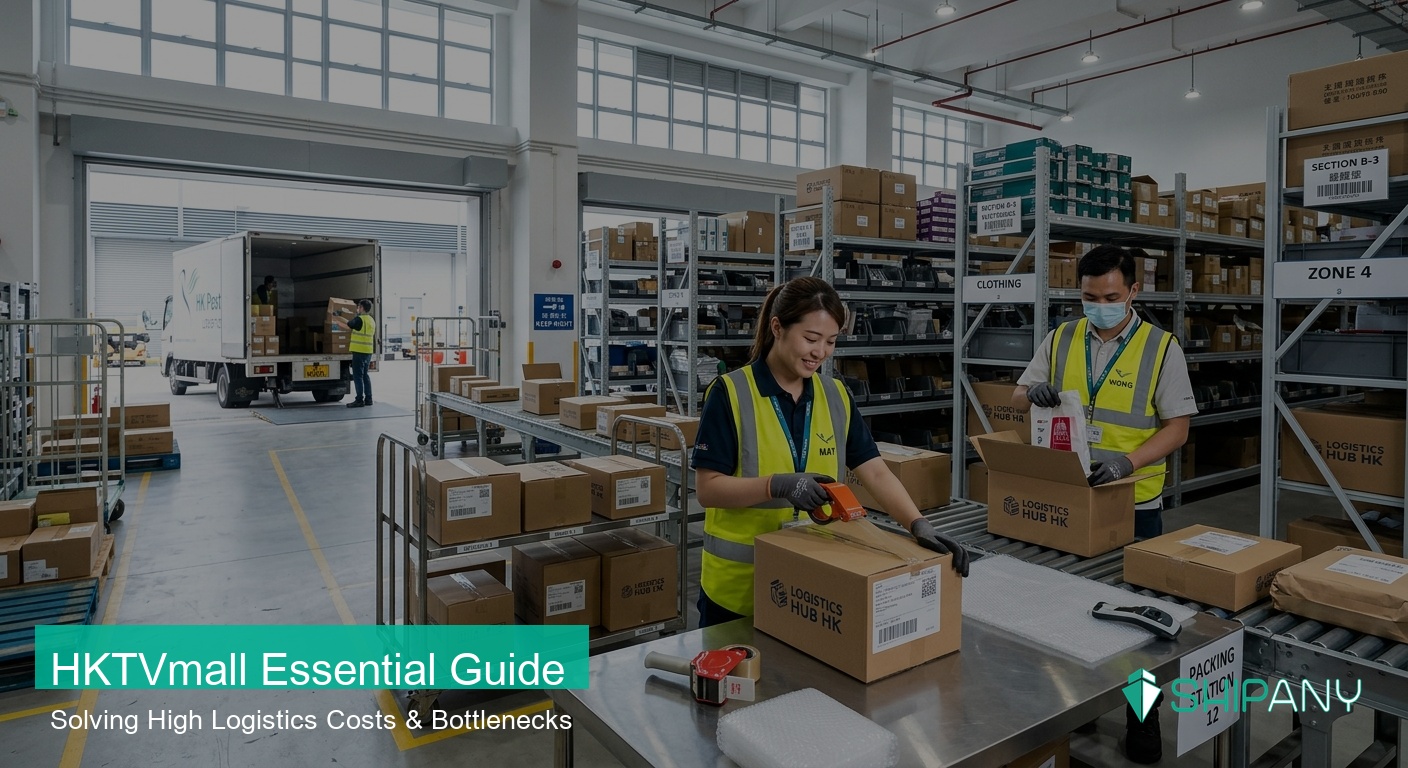
Operating a store on HKTVmall is an excellent way for small and medium-sized enterprises to acquire customers quickly. However, as order volumes grow, logistics often become the bottleneck restricting business expansion. From inventory management, packaging, and order processing to final delivery, every logistical detail directly affects operating costs and customer satisfaction. This article analyzes common pain points and provides systematic logistics optimization suggestions to help you turn logistics into a brand competitive advantage.
1. Logistics Challenges in the Expansion Phase: Why Does Efficiency Lag Behind?
When order volumes grow from a few per day to dozens or hundreds, traditional manual processing models quickly hit their limits. During this “scaling” phase, merchants often encounter the following dilemmas:
- Fragmented Order Processing: Constantly switching between the HKTVmall backend, spreadsheets, and carrier portals is not only time-consuming but highly prone to human error, such as mislabeling or shipping to the wrong address.
- Shipping Delays: When shipping velocity cannot keep up with order growth, customer complaints rise, directly damaging your store’s ranking and reputation.
- Inventory Mismanagement: Without real-time synchronization between logistics and inventory systems, merchants often face the risk of overselling or shipping the wrong product, which is detrimental to brand trust.
Expansion is not simply about adding more staff; it is about building a scalable and repeatable operational workflow.
2. Breaking Down the Pain Points: The Logistics Loopholes Affecting Profits
Based on our deep dive into HKTVmall operations, we have summarized four core pain points that act as profit killers:
A. Fragmented Order Processing
Manual operation prevents batch processing and fails to handle spikes in demand (e.g., promotional events like 11.11). Every minute wasted on manual data entry is a direct drain on your profit margins.
B. The Hidden Cost of Reverse Logistics (Returns)
Returns are often viewed as isolated incidents, but without a defined inspection, cleaning, and repackaging process, the cumulative labor cost of managing returns can easily exceed the original fulfillment cost, turning sales into losses.
C. High Hidden Costs
Hidden costs like packaging material waste, tape usage, and time spent resolving “Where is my package?” inquiries are often ignored at small scales. As operations expand, these inefficiencies grow into a massive overhead that cripples your bottom line.
D. Packaging Inefficiency and Volumetric Billing
Merchants who lack standardized packaging often use boxes that are too large for their products, leading carriers to charge “dimensional weight” (volumetric billing) based on the size of the box rather than the actual weight, unnecessarily inflating shipping expenses.
3. Logistics Cost Accounting: Building Your “Logistics Burden Ratio”
To make business decisions based on data, merchants should establish a Performance Indicator (KPI) dashboard:
- Picking Efficiency: How many units are packed per hour? This helps you evaluate if your current staffing is optimal.
- Order Fulfillment Lead Time: The time gap between order placement and carrier pickup. This is the primary driver of customer satisfaction and positive reviews.
- Exception Rate: What percentage of orders require manual intervention (e.g., address corrections, shipping delays)?
- Consumable Rate: Packaging cost as a percentage of product sales.
By tracking these, you can determine exactly when to transition from self-fulfillment to an outsourced 3PL model.
4. The Solution: Automation and Process Optimization
To break free from tedious logistics work, one must shift toward “automation”:
- Logistics System Integration: Use third-party logistics platforms that connect directly to HKTVmall order data. This allows you to batch-print shipping labels, auto-sync tracking numbers, and update order statuses with a single click, reducing processing time by over 70%.
- ABC Warehouse Analysis: Categorize SKUs by sales velocity. Store high-velocity “A” items in the “Golden Zone” closest to your packing station to minimize walking time. This simple spatial strategy can improve picking speed by 30-40%.
- Standardization: Adopt 3-5 standard box sizes and fixed packaging configurations for each category to minimize waste and avoid volumetric surcharges.
5. Conclusion: Logistics is a Key Part of Brand Experience
Logistics is not just a back-end task; it is the final mile of the customer journey. When shipping is fast and tracking is transparent, customer trust increases, leading to higher repurchase rates. Investing in logistics optimization is essentially an investment in your brand’s future. By automating operations and standardizing processes, you liberate your most valuable resource—your time—allowing you to focus on product development and brand storytelling rather than shipping labels.
—
FAQ
Q: How to deal with logistics pressure during peak seasons?
A: We suggest planning warehouse space 1-2 months in advance, stocking up on packaging materials, and coordinating priority shipping agreements with your logistics partners. Pre-planning staffing and pickup schedules is essential to prevent operational paralysis during peak traffic.
Q: How can HKTVmall merchants reduce return costs?
A: The best return management is prevention. Accurate product descriptions, clear sizing guides, and timely real-time customer service response effectively reduce returns caused by misunderstandings. Furthermore, having a clear quality-check standard for returned items accelerates the reverse logistics workflow.
Q: Is logistics automation suitable for small online stores?
A: Absolutely. In the early stages, small stores should focus on customer acquisition, but automation ensures operational stability. It saves time and provides the robust foundation needed for scalable growth in the long run.